Research Articles and Intellectual Property Rights (IPRs)

Filter
Categories
Sub-Categories
Tags
Publications
Publications

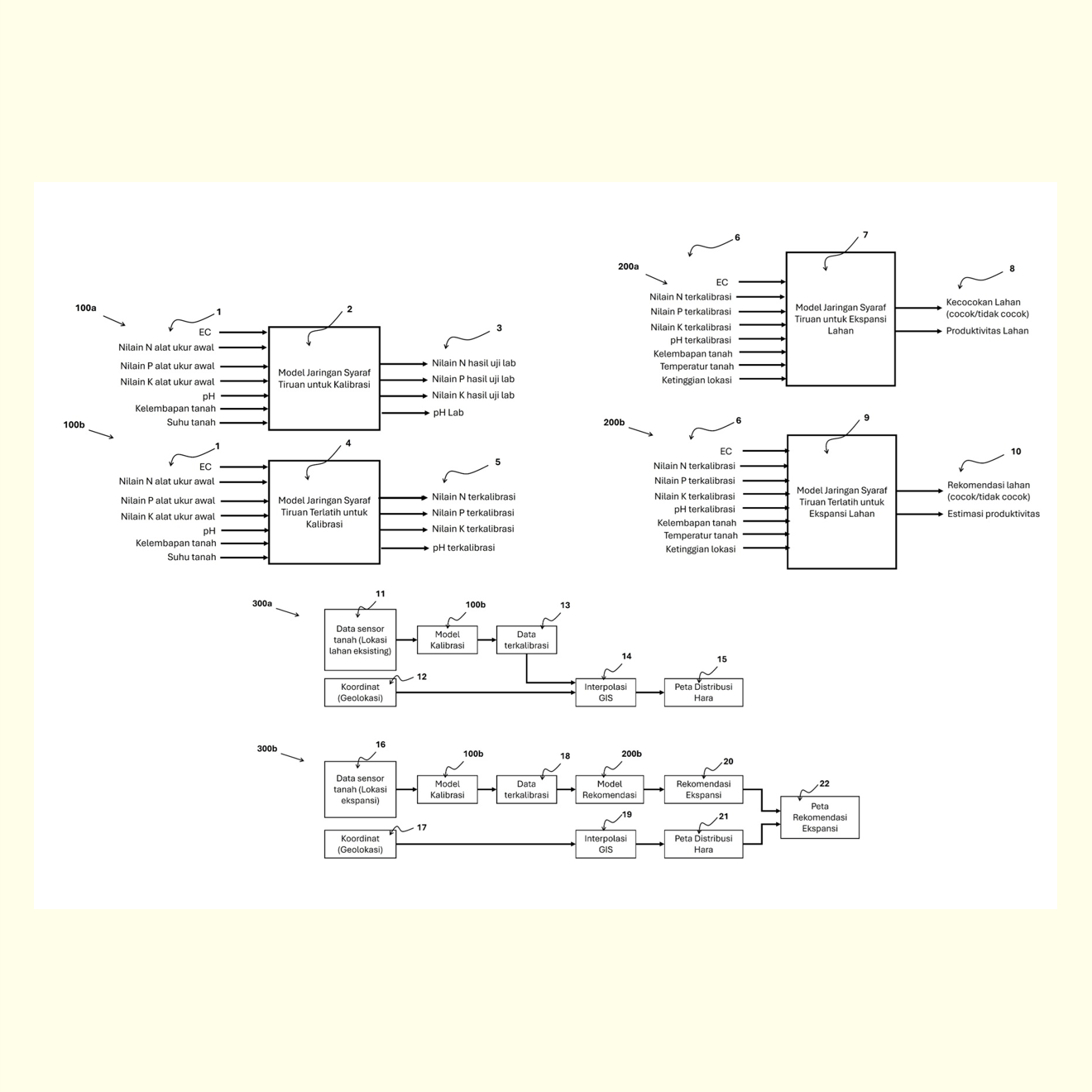
Invensi ini ini mengenai metode untuk melakukan rekomendasi ekspansi lahan pertanian berbasis model jaringan syaraf tiruan dengan kalibrasi sensor komersial, lebih khusus lagi. Tujuan utama dari invensi ini adalah untuk menyediakan suatu metode rekomendasi ekspansi lahan pertanian yang mengintegrasikan model jaringan syaraf tiruan (JST) dengan kalibrasi sensor komersial sehingga dapat meningkatkan akurasi data hara tanah dan menghasilkan rekomendasi kelayakan lahan yang lebih objektif. Metode tersebut yang dicirikan dengan langkah-langkah: (a) mengumpulkan data keluaran sensor komersial yang belum terkalibrasi dari lahan eksisting dan lahan ekspansi; (b) memasukkan data keluaran sensor tersebut ke dalam model kalibrasi jaringan syaraf tiruan yang telah dilatih untuk menghasilkan nilai unsur hara terkalibrasi; (c) melakukan interpolasi spasial menggunakan data unsur hara terkalibrasi dan geolokasi titik pengukuran untuk membentuk peta distribusi hara; (d) memasukkan data unsur hara terkalibrasi dan parameter lingkungan ke dalam model jaringan syaraf tiruan rekomendasi ekspansi yang telah dilatih untuk menghasilkan rekomendasi kelayakan ekspansi serta estimasi produktivitas; dan (e) menggabungkan peta distribusi hara dengan rekomendasi kelayakan ekspansi untuk menghasilkan peta distribusi rekomendasi ekspansi lahan pertanian.

No. Permohonan: S00202514466
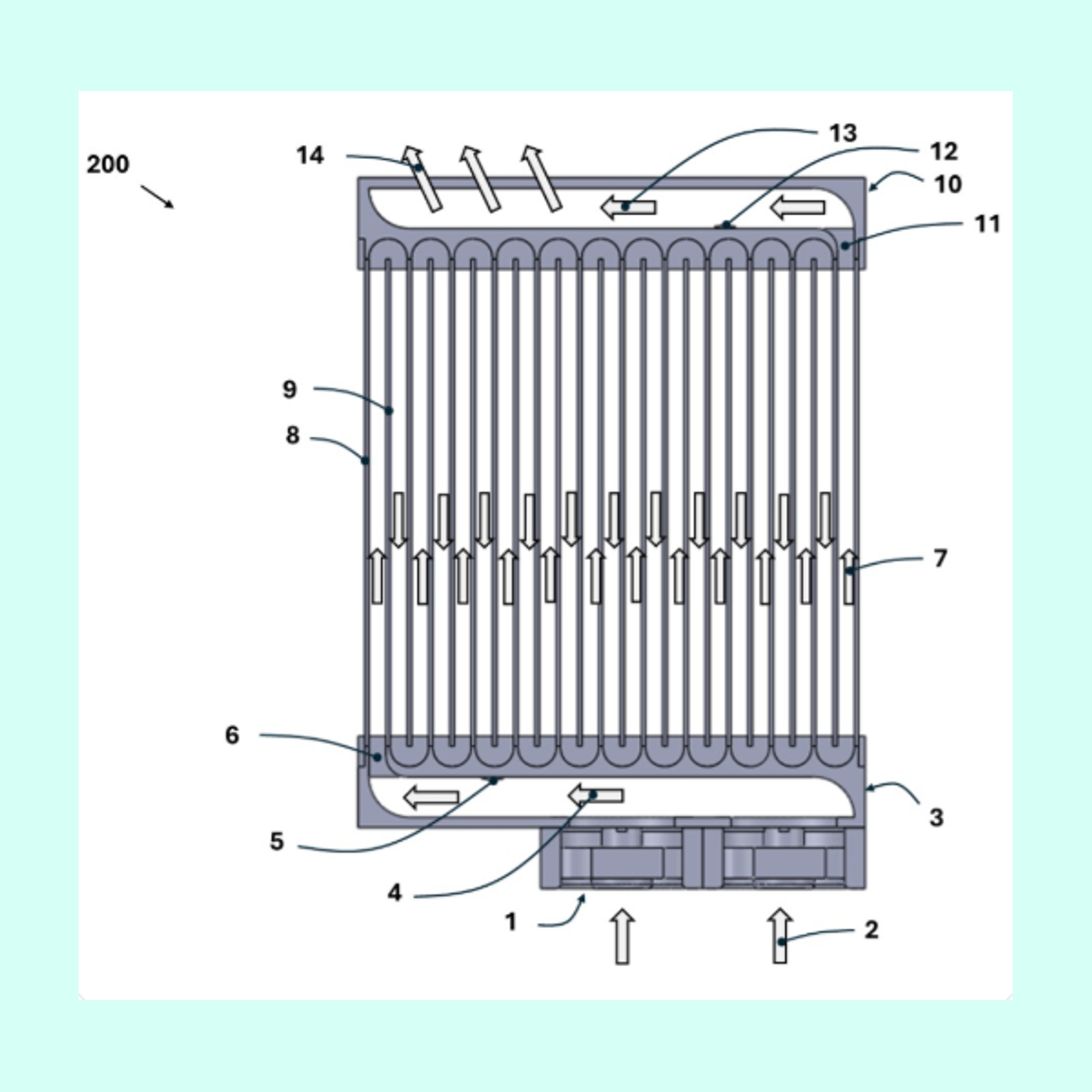
Invensi ini mengenai Pemurni Udara dengan Sistem Pengion Ganda dan Plat Sejajar untuk Pengendapan Partikulat, lebih khusus lagi, invensi ini berhubungan dengan sistem pemurni udara berbasis ionisasi dan pengendapan elektrostatik, yang tidak hanya membersihkan udara di dalam perangkat tetapi juga memengaruhi partikulat di lingkungan sekitar. Suatu pemurni udara sesuai dengan invensi ini terdiri dari: peniup udara (1) untuk menarik udara kotor dari lingkungan, ruang ionisasi awal (3) yang dilengkapi dengan pengion pertama (5) untuk memberikan muatan pada partikulat, saluran serpentin (multi-pass) dengan lipatan U (7) yang dilengkapi dengan plat sejajar (8) dan (9), dimana plat (8) dihubungkan ke tanah/sasis dan plat (9) diberi tegangan listrik positif atau negatif sehingga menimbulkan medan listrik untuk mengendapkan partikulat bermuatan, ruang ionisasi akhir (10) yang dilengkapi dengan pengion kedua (12) untuk memberikan muatan pada udara bersih sebelum dilepaskan ke lingkungan, dan celah keluaran (11, 14) untuk mengeluarkan udara bersih terionisasi kembali ke lingkungan, yang dicirikan dengan adanya konfigurasi saluran serpentin (multi-pass) dengan lipatan U yang memperpanjang retensi udara dalam medan listrik sehingga efisiensi pengendapan partikulat meningkat.

No. Permohonan: S00202510146
TrapGradien, sebuah sistem pemurni udara berbasis ionizer dan presipitasi elektrostatik yang terintegrasi dengan teknologi AIoT untuk pemantauan kualitas udara dan pemeliharaan prediktif. Ionizer pada sistem TrapGradien menghasilkan ion positif dan negatif untuk mengionisasi aerosol di udara kotor (upstream), sehingga sebagian besar partikel menjadi bermuatan. Selanjutnya, presipitator elektrostatik menangkap partikel bermuatan tersebut, mengubah udara kotor menjadi udara bersih (downstream). Pada tahap downstream, ionizer tambahan digunakan untuk memproduksi ion negatif yang dilepaskan ke lingkungan, memberikan efek muatan pada aerosol di sekitar. Hal ini mempermudah deposisi partikel di lingkungan karena partikel yang bermuatan cenderung menempel pada permukaan. Selain itu, TrapGradien dilengkapi dengan teknologi AIoT untuk memantau kualitas udara secara realtime dan melakukan pemeliharaan prediktif, memastikan kinerja sistem tetap optimal.
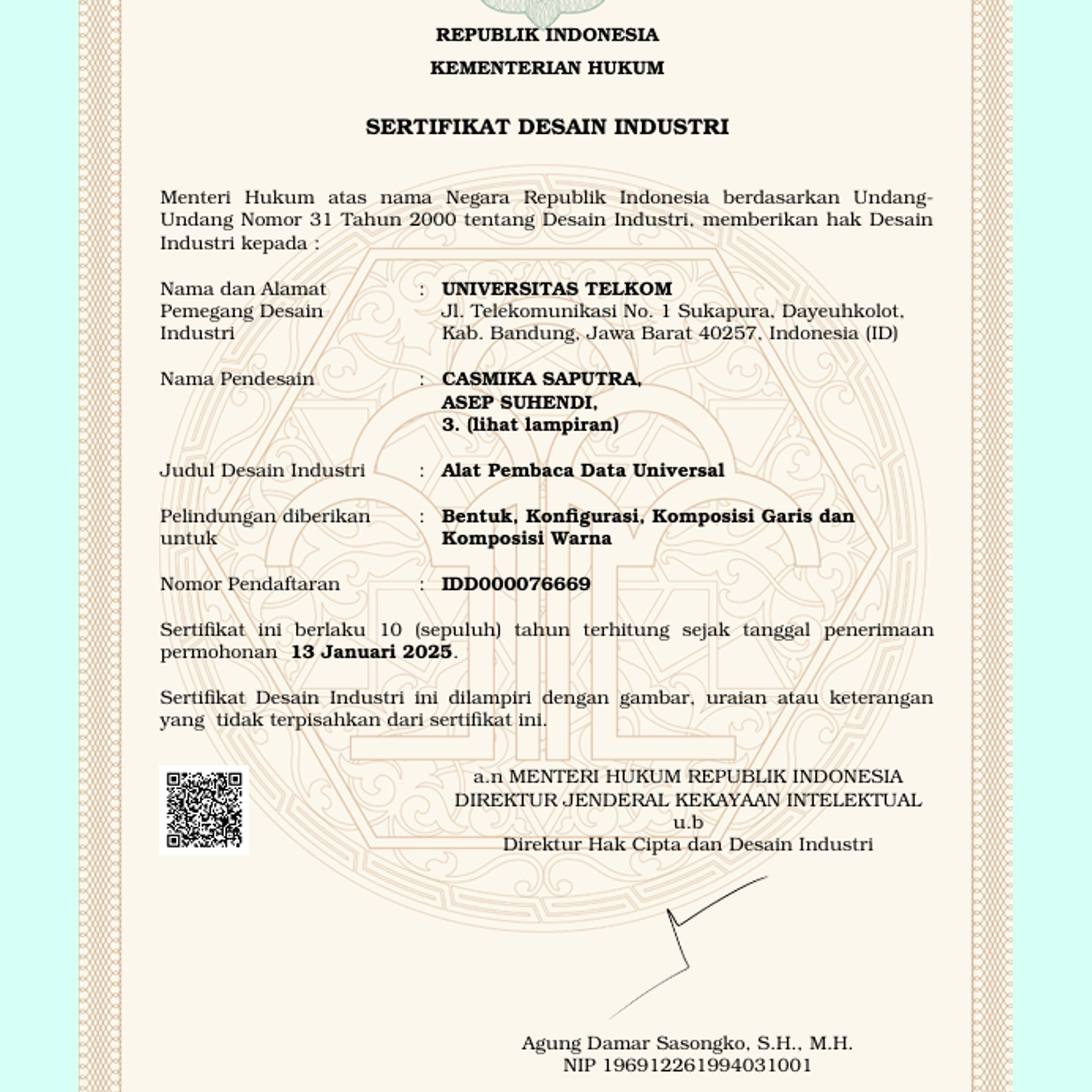
Sistem pembaca data universal yang memungkinkan penarikan data dari tampilan LCD/LED 7 segmen pada perangkat ukur konvensional secara non-invasif. Pendekatan ini menggunakan teknologi pemrosesan gambar untuk mengenali dan menerjemahkan tampilan perangkat konvensional menjadi data yang dapat diakses dan dimanfaatkan secara luas. Sistem ini sebagai alternatif metode invasif seperti pengambilan sinyal analog sensor sebelum diproses oleh kontroler atau prosesor perangkat, yang mana cenderung dapat merusak atau setidaknya memberi bias/eror pada perangkat itu sendiri. Dengan sistem ini perangkat konvensional dapat diintegrasikan dengan sistem digital, Internet of Things (IoT), atau teknologi lainnya.

AirGradien adalah sebuah sistem wearable yang dirancang untuk pemantauan kualitas udara secara personal. Sistem ini dilengkapi dengan berbagai sensor yang dapat mengukur partikel udara (Particulate Matter/PM), suhu, kelembaban, tekanan udara, dan senyawa organik volatil (Volatile Organic Compounds/VOC) secara real-time. Data yang dihasilkan dari sistem ini akan divisualisasikan dan dapat dipetakan, memungkinkan pengguna untuk memantau kualitas udara di sekitar mereka secara akurat dan langsung. AirGradien juga terintegrasi dengan teknologi Internet of Things (IoT) sehingga memungkinkan pemantauan dan pengendalian jarak jauh.

Teman.AL adalah smartwatch yang dapat digunakan untuk membantu memantau dan melacak lokasi pengidap demensia dan alzheimer setiap saat. Teman.AL ini dikembangkan sebagai langkah preventif untuk keluarga dan dokter agar dapat memantau perilaku berisiko dari pengidap.
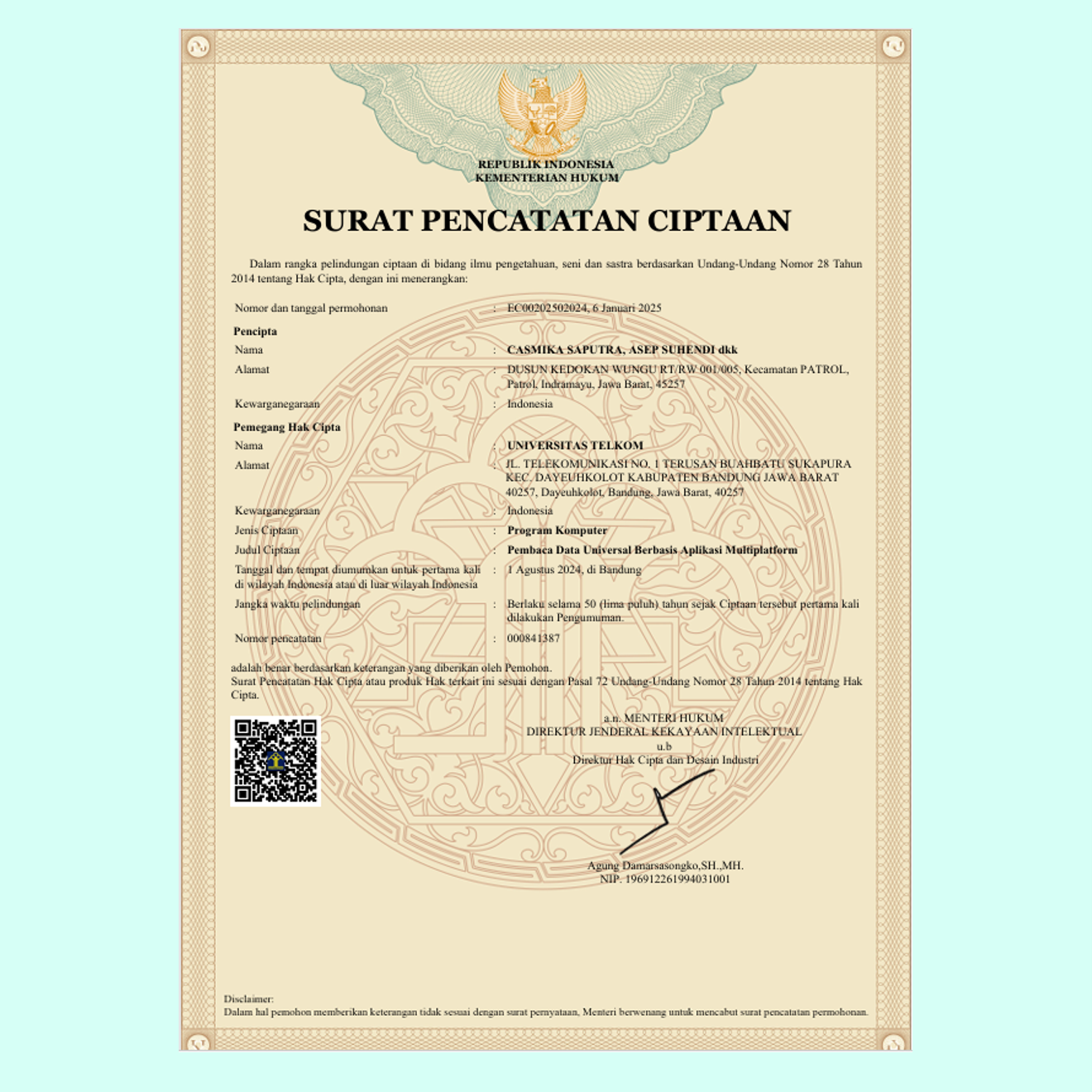
Sistem Pembaca Data Universal berbasis Aplikasi Multiplatform yang dapat digunakan untuk membaca data dari tampilan Perangkat Ukur Konvensional. Tujuan dari aplikasi ini adalah untuk Mendukung Digitalisasi dan Integrasi dengan Teknologi lainnya.

Sistem Pembaca Data Universal berbasis Aplikasi Multiplatform yang dapat digunakan untuk membaca data dari tampilan Perangkat Ukur Konvensional. Tujuan dari aplikasi ini adalah untuk Mendukung Digitalisasi dan Integrasi dengan Teknologi lainnya.

Program Komputer Graphical User Interface untuk AUGV Monitoring System berbasis Bahasa Pemrograman Phyton
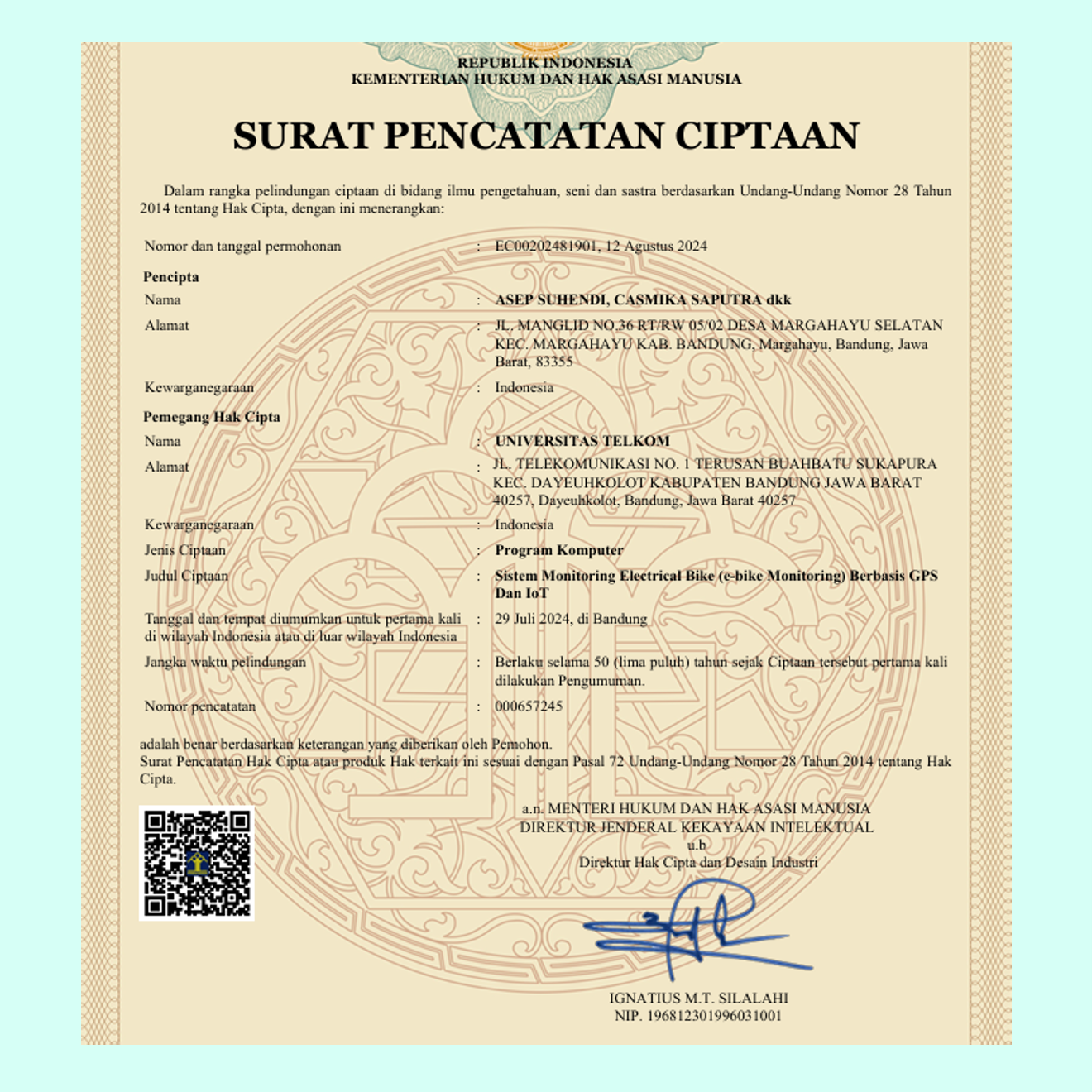
Sistem Monitoring Electrical Bike (e-bike monitoring) berbasis GPS dan IoT adalah sistem monitoring dan tracking parameter kelistrikan dan posisi geografis motor listrik berbasis GPS menggunakan aplikasi berbasis Website. Aplikasi ini dirancang agar pengguna dapat monitoring level baterai dan tracking posisi e-bike setiap saat. Website juga dirancang agar memudahkan pengguna untuk membuka melalaui smartphone. Selain itu, pengguna juga dapat mencegahnya potensi pencurian motor listrik dengan adanya fitur notifikasi untuk mengingatkan pengguna dalam memantau motor listrik saat status motor dalam keadaan terkunci atau tidak. Selain itu, perpindahan posisi sedang motor tidak menyala dan notifikasi peringatan untuk keadaan baterai saat baterai penuh, hampir habis dan habis.
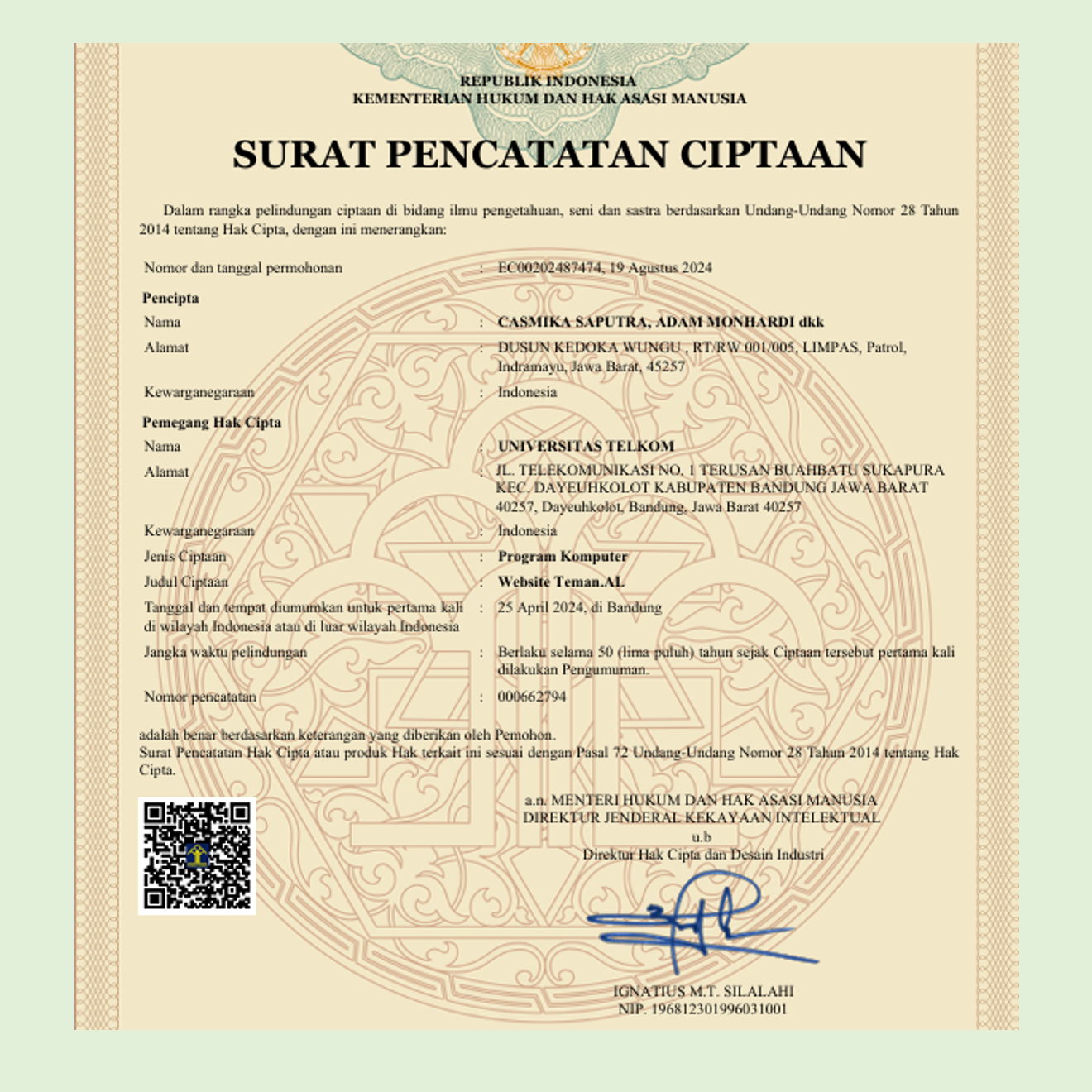
Website Teman.AL adalah aplikasi web untuk membantu memantau dan melacak lokasi pengidap demensia dan alzheimer setiap saat. Aplikasi web ini dikembangkan sebagai langkah preventif untuk keluarga dan dokter agar dapat memantau perilaku berisiko dari pengidap.
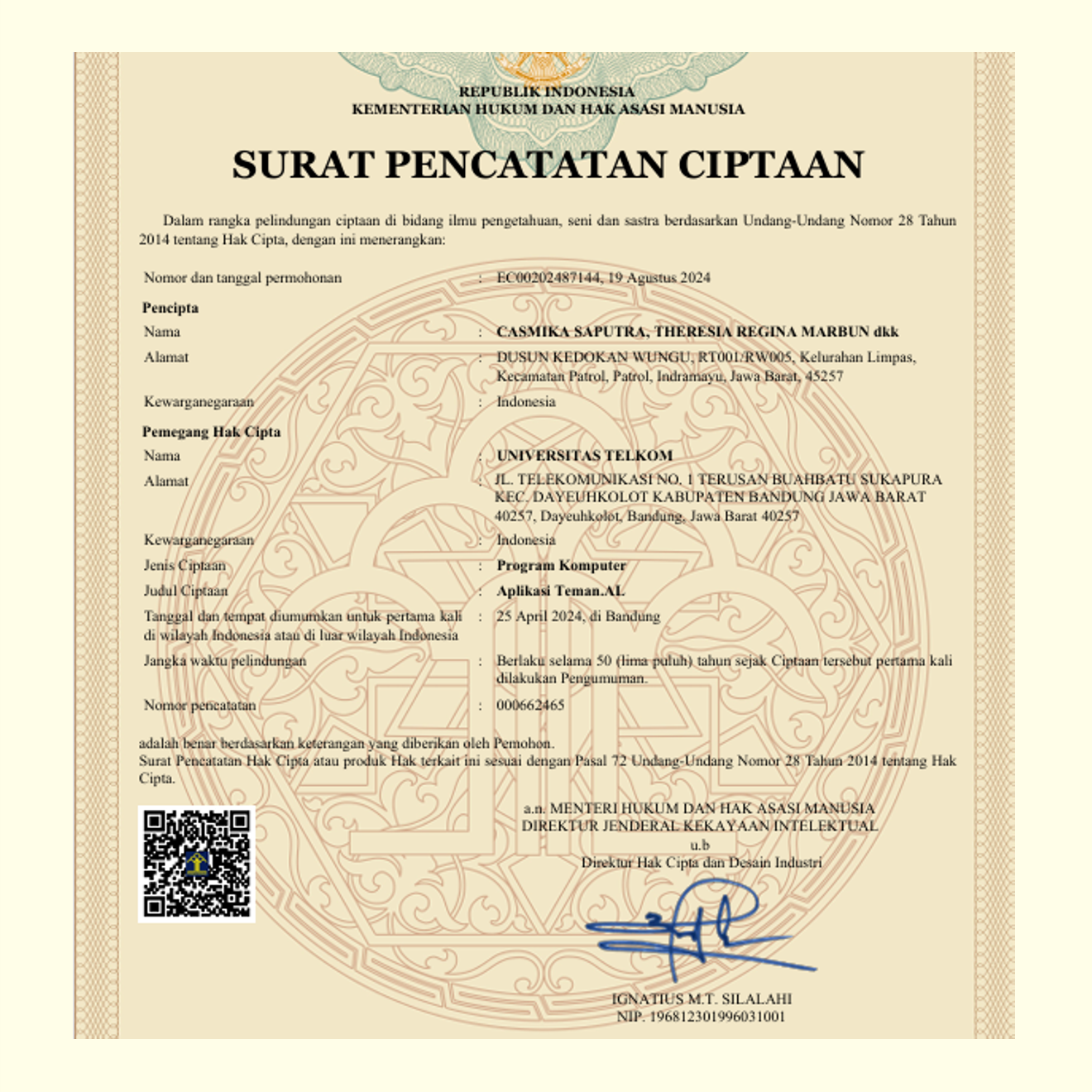
Aplikasi Teman.AL adalah aplikasi android yang dapat digunakan untuk membantu memantau dan melacak lokasi pengidap demensia dan alzheimer setiap saat. Aplikasi ini dikembangkan sebagai langkah preventif untuk keluarga dan dokter agar dapat memantau perilaku berisiko dari pengidap.
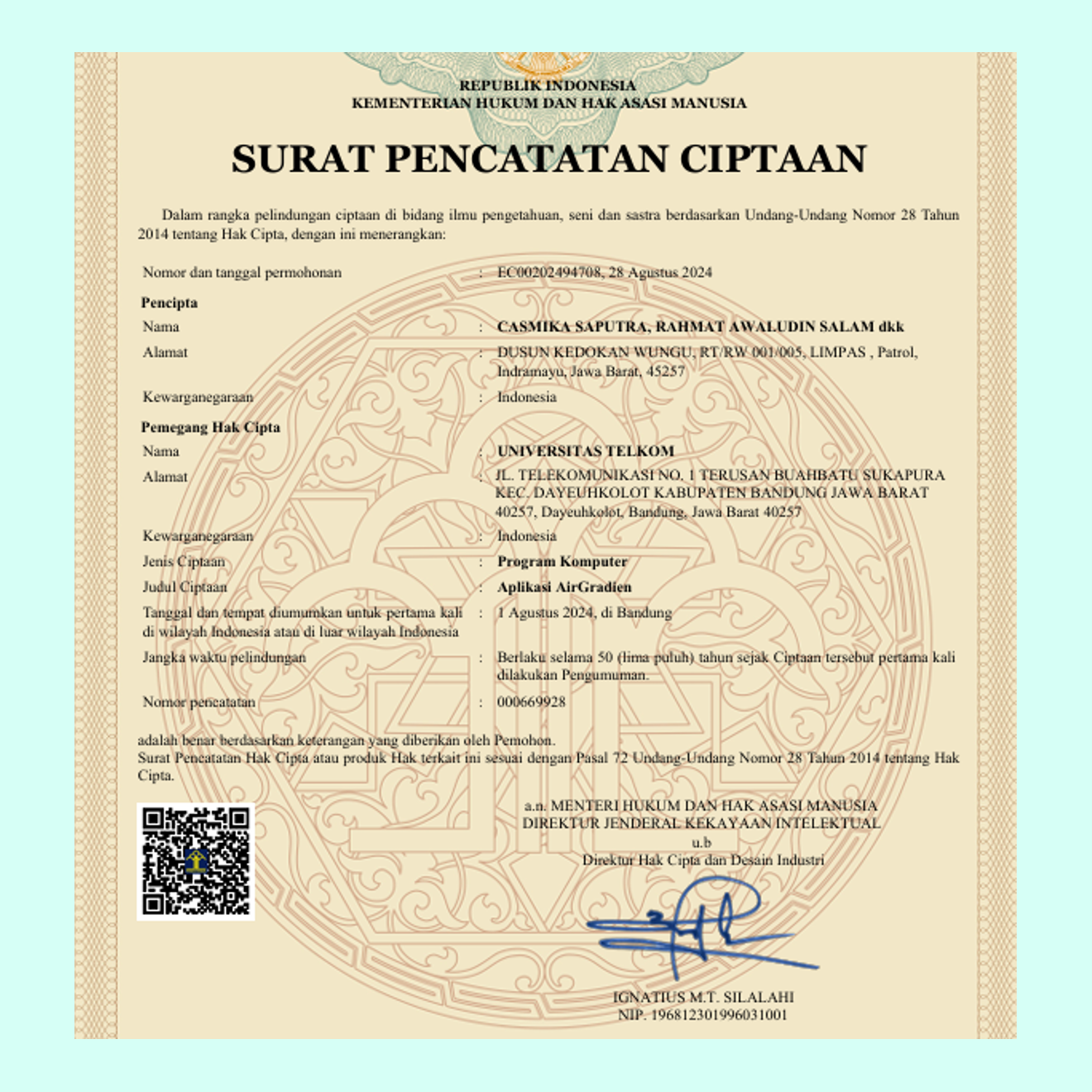
Aplikasi AirGradien dirancang untuk pemantauan kualitas udara dan pelacakan aktivitas secara personal. Aplikasi ini terhubung dengan perangkat AirGradien, sebuah sistem wearable yang memantau paparan polusi udara secara individual. Melalui aplikasi ini, pengguna dapat dengan mudah mengakses informasi tentang kualitas udara di sekitar mereka selama menjalani aktivitas sehari-hari.
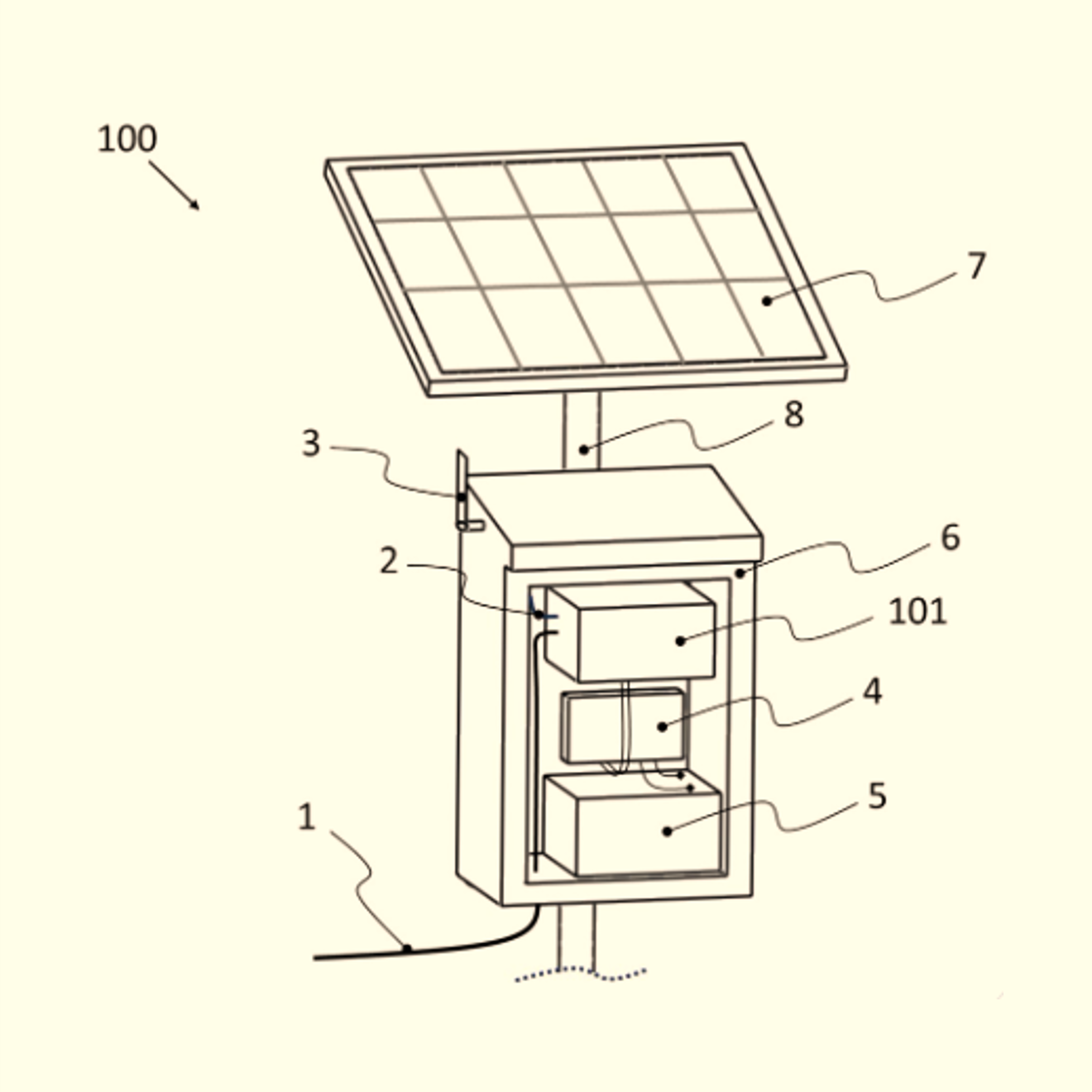
Invensi ini mengenai Sistem Deteksi Pergerakan Tanah berbasis Serat Optik dan Internet of Things, lebih khusus lagi, invensi ini berhubungan dengan suatu sistem yang dapat digunakan untuk mendeteksi pergerakan tanah sehingga dapat digunakan untuk keperluan deteksi longsor. Invensi ini berbasis internet of things (IoT) sehingga data pengukuran dapat dipantau dari manapun dan kapanpun dengan koneksi internet dan oleh siapa pun yang memiliki otoritas. Dalam invensi ini, serat optik dimanfaatkan sebagai sensor. Invensi ini juga termasuk mekanisme untuk membuat serat optik menjadi lebih bengkok bahkan hingga patah saat terjadi pergeseran tanah.

No. Paten: IDS000012712
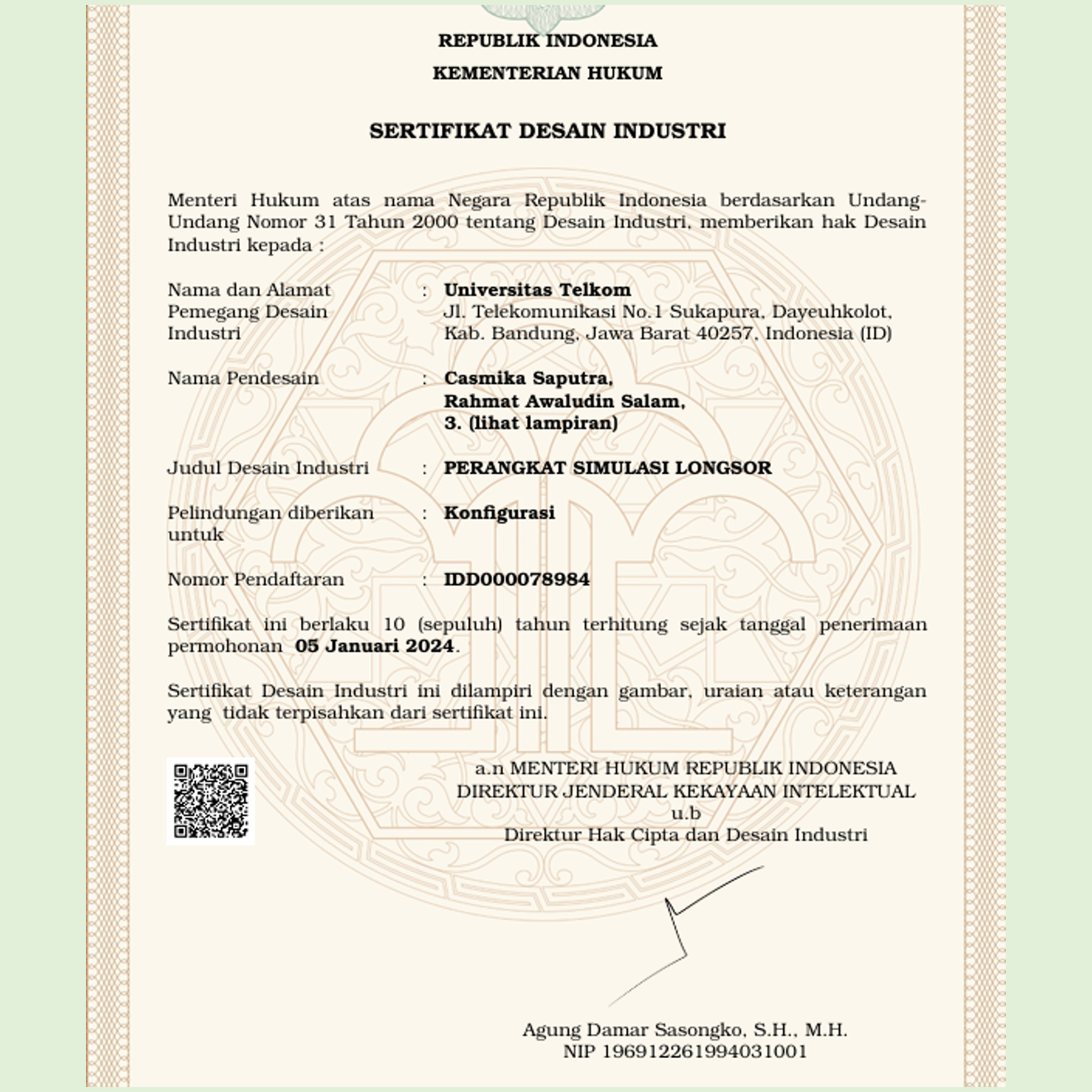
Simulator Longsor merupakan perangkat yang dapat digunakan untuk mensimulasikan proses longsoran tanah. Simulator Longsor ini memiliki kemampuan untuk mengatur kemiringan secara otomatis.
Sebuah merek aquaponik

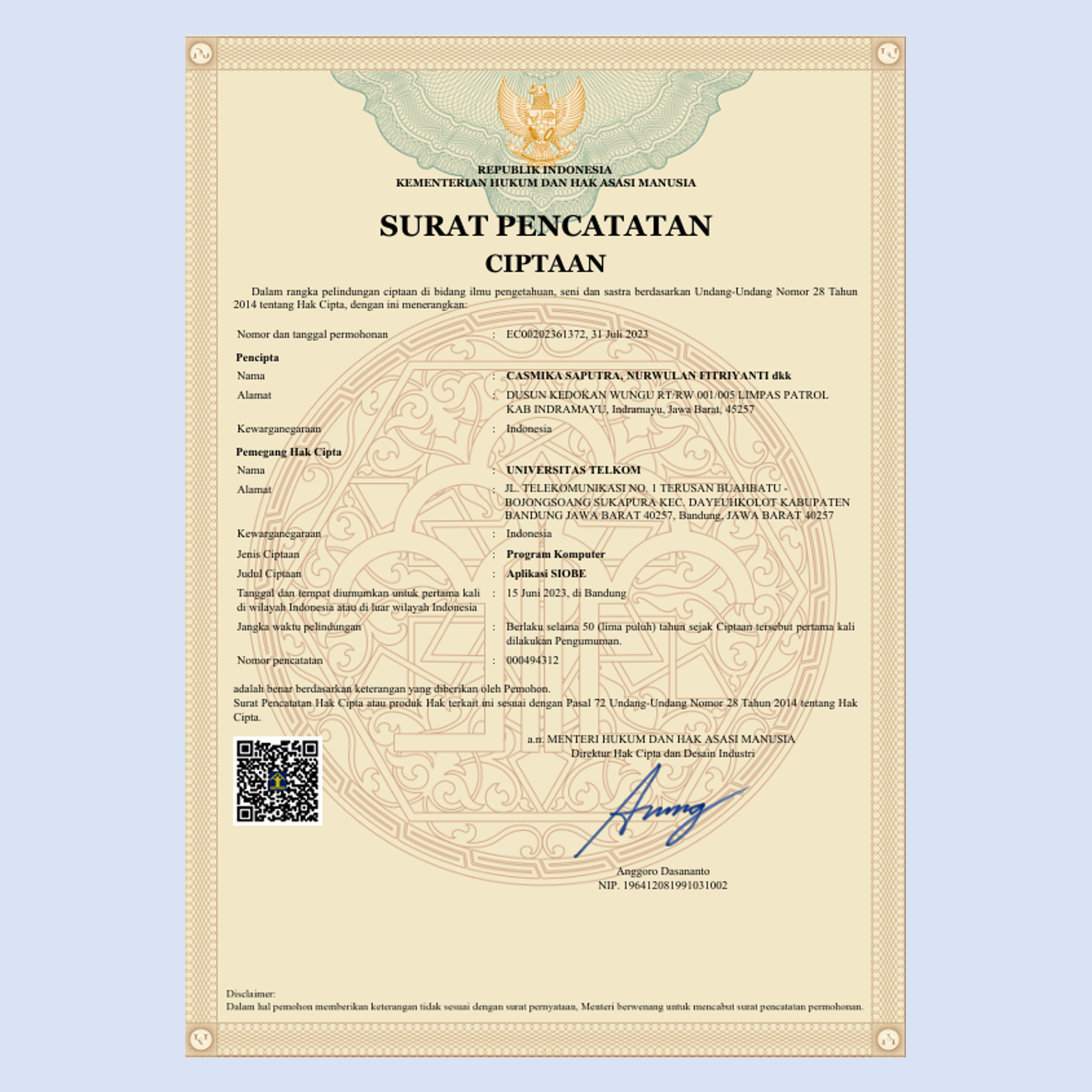
SiOBE adalah sebuah aplikasi berbasis web yang dirancang khusus untuk mendukung proses administrasi dan pelaksanaan Outcome-Based Education (OBE). Aplikasi ini bertujuan untuk membantu institusi pendidikan dalam mengelola dan melacak berbagai aspek yang terkait dengan implementasi OBE, termasuk pemetaan capaian pembelajaran dan rekam jejak dan transkrip hasil belajar mahasiswa.
Abstract

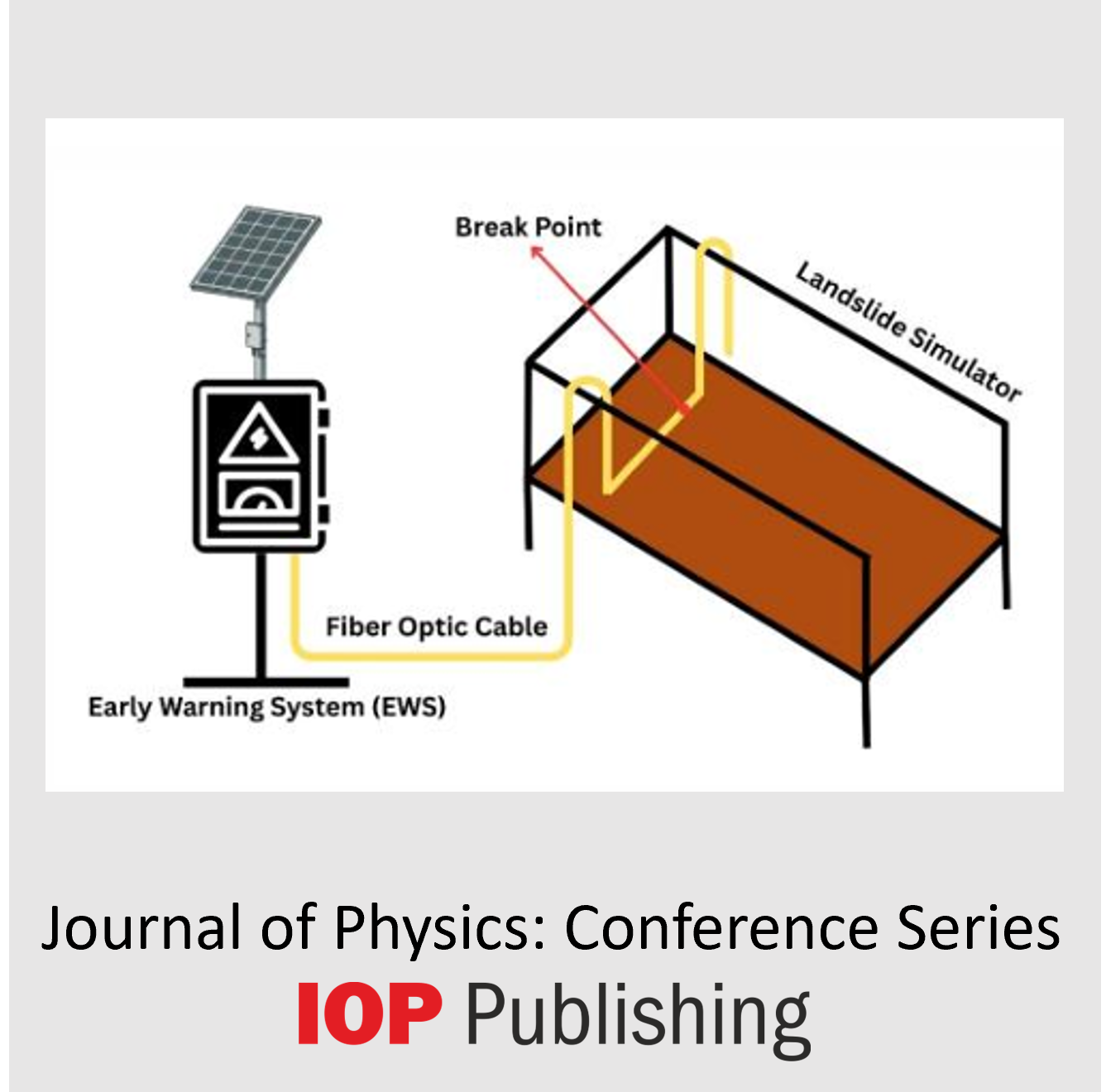
This study presents a low-cost landslide monitoring system that integrates Optical Time Domain Reflectometry (OTDR), ESP32-CAM–based digit recognition, LoRa communication, and a solar-powered IoT platform for real-time ground-movement detection. The system utilizes an OTDR (SGOT04) connected to fiber optic cables installed along the monitored slope, while the ESP32-CAM performs both OTDR data acquisition and numerical extraction from the device’s 7-segment display using a lightweight threshold-based segmentation method. The processed data are transmitted using LoRa RFM95 and visualized through a cloud dashboard for remote monitoring. System performance was evaluated through controlled laboratory and field-simulated tests. LoRa transmission demonstrated low packet loss across distances up to 150 m, with a 24-hour reliability test yielding only 1.08% data loss and 2.74% digit-recognition misreads. Comparative analysis between the SGOT04 and a reference OTDR (Yokogawa AQ1000) showed near-perfect linearity up to 5000 m, validating the accuracy of the low-cost device for cable-length measurement. A landslide simulation test using a droplet-loop fiber-breaking mechanism successfully triggered a detectable cable disruption at a slope angle of 36.9°, reflected by a sudden change in measured cable length from 1043 m to 1026 m. These results demonstrate that the proposed OTDR-IoT system provides accurate, stable, and cost-effective monitoring of ground movement and can serve as a promising early-warning solution for landslide-prone areas. Future improvements include advanced filtering, enhanced power optimization, and long-term field deployment.

Abstract

Accurate measurement of phase and amplitude differences between input and output signals is essential in characterizing dynamic behaviour in electrochemical and optical instrumentation systems. In this study, an In-phase and Quadrature (I/Q) demodulation technique is implemented as a method for extracting both phase shift and amplitude ratio under noisy signal conditions. The system demodulates the measured signal using two orthogonal reference signals at 0° (in-phase) and 90° (quadrature), enabling the extraction of real-time phase and amplitude information. The analog front-end consists of a phase-sensitive detector and a low-pass filter to suppress high-frequency components. The filtered outputs are digitized using a high-resolution ADC after appropriate level shifting. Experimental results demonstrate that the proposed system achieves reliable signal recovery with good tolerance to noise up to 20 dB. Beyond this threshold, the recovered signals exhibit substantial deviations, resulting in unacceptable errors in amplitude and phase estimation. Furthermore, validation through EIS measurements shows that the system is able to reproduce Nyquist responses in good agreement with theoretical predictions. In addition to its measurement capability, the developed system also supports laboratory-based learning by providing a practical framework for understanding AC circuits, spectral impedance analysis, and complex-number data processing.
Abstract

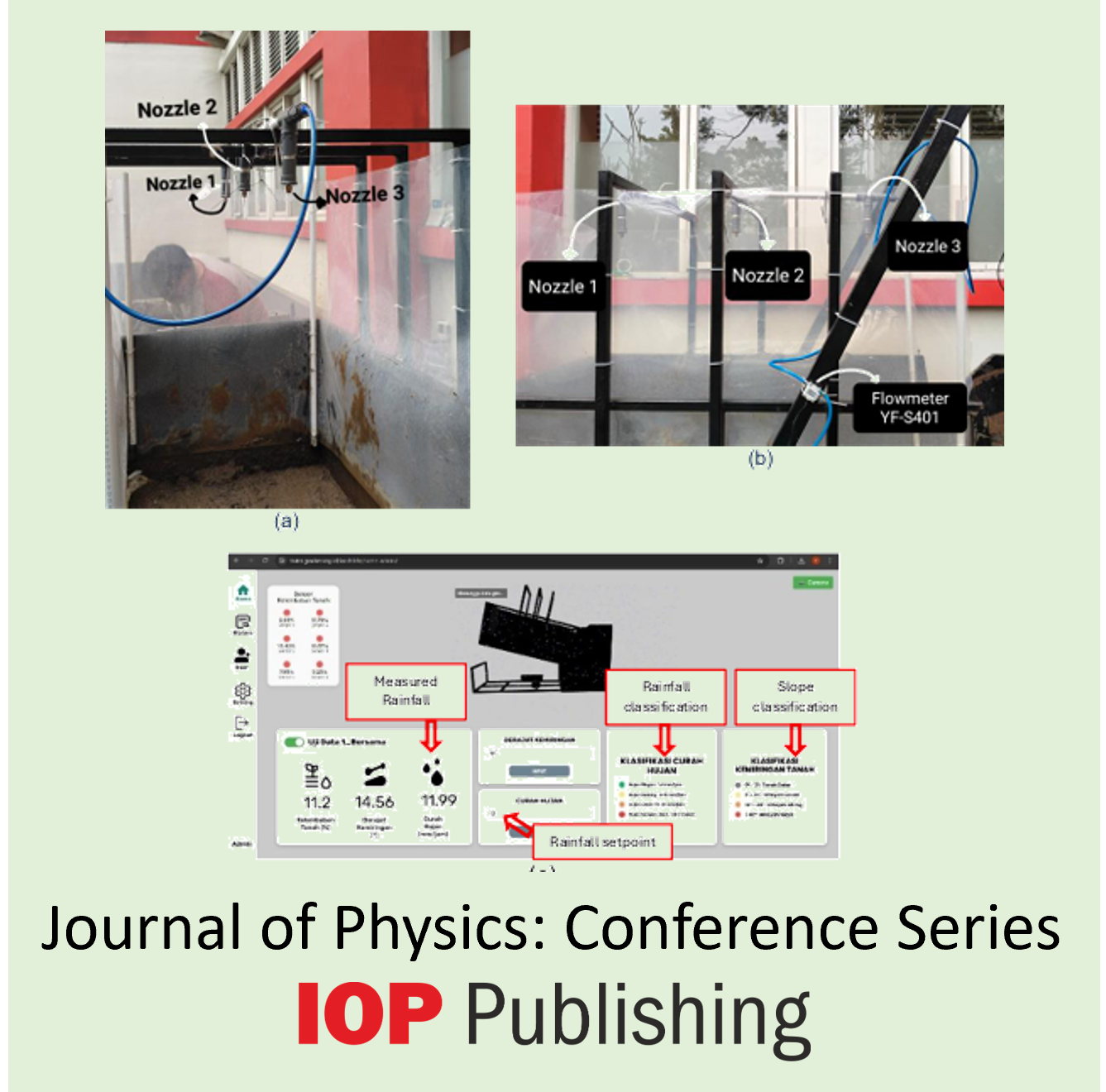
This study presents the design, integration, and performance evaluation of a controlled rainfall simulator developed as an add-on for a landslide simulation system. The simulator generates rainfall intensities from 0 to 20 mm/h, adjustable via a web interface, and operates using six spraying cycles per hour. Each cycle employs ON/OFF control with volume-based feedback: the pump runs until the accumulated volume reaches the predefined target, then stops automatically. A Proportional–Integral (PI) controller maintains a stable flow rate of 2 L/min to ensure consistent spray performance. The device is fully integrated with the landslide simulator chamber, enabling controlled rainfall experiments on various slope configurations. Experimental results show that the system maintains rainfall intensity with a volume error below 5% across all tests. However, the distribution uniformity remains below 80%, indicating the need for nozzle configuration improvements for applications requiring higher homogeneity. Overall, the system enhances the capability of landslide simulation experiments and supports research in soil stability and hydrological processes.
Abstract

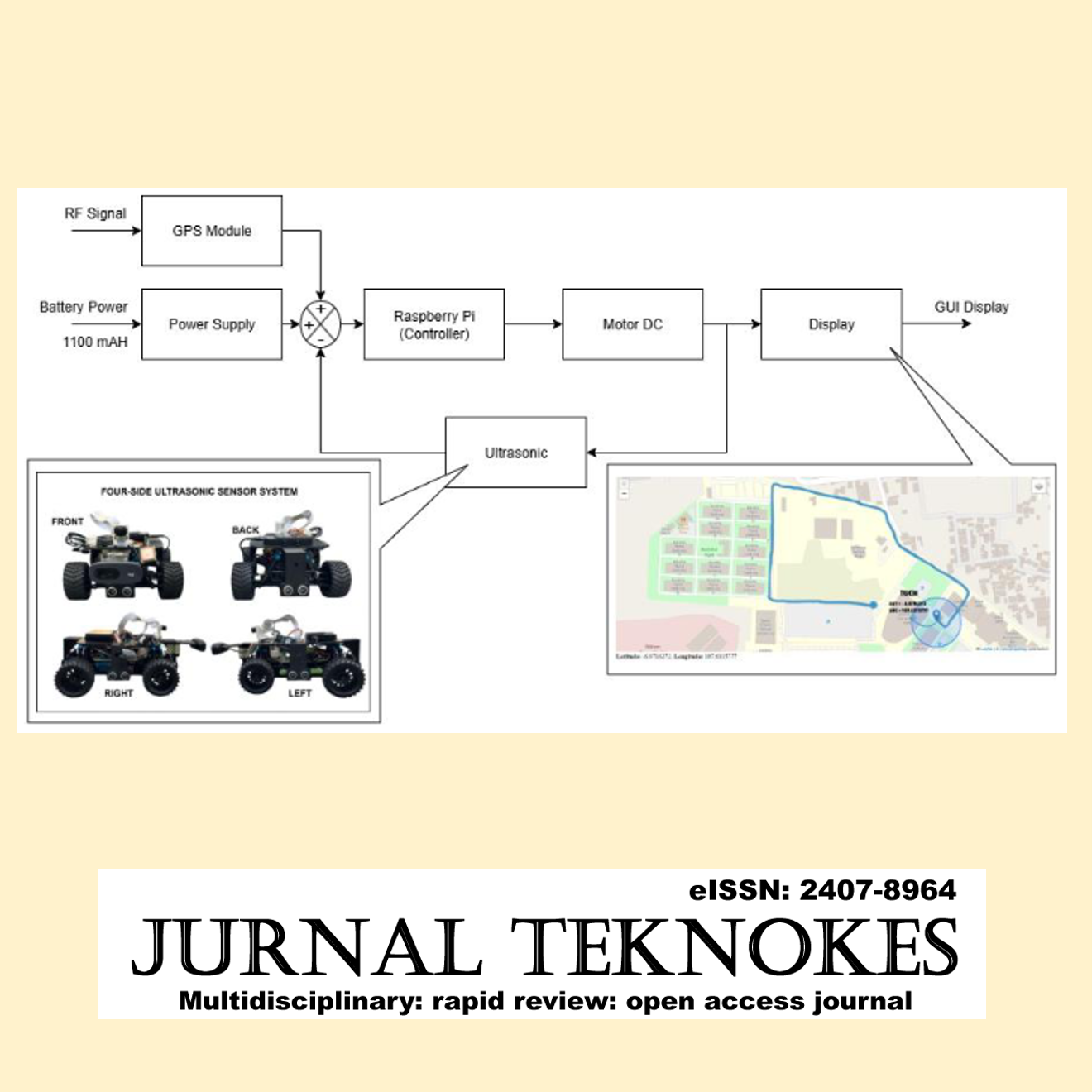
The rapid advancement of autonomous systems has driven the development of intelligent navigation technologies across various fields, including transportation, robotics, and environmental monitoring. However, many autonomous ground vehicle platforms rely on high-cost sensors and complex system architectures, limiting their accessibility for research and education purposes. To address this challenge, this study proposes a cost-effective miniature Unmanned Ground Vehicle (UGV) integrating a Neo Ublox M8N GPS module with a four-sided ultrasonic sensing system to support real-time navigation and local obstacle awareness. The proposed system combines global positioning data with multi-directional short-range distance detection, processed through a Raspberry Pi and visualized via a web-based platform for real-time monitoring. Experimental testing was conducted under controlled outdoor and indoor conditions to evaluate GPS positioning accuracy, ultrasonic detection performance, and overall system responsiveness. The Neo Ublox M8N module achieved an average positional error of 4.35 m, corresponding to an accuracy of 97.4%, representing an improvement over previous studies using low-cost GPS receivers without algorithmic enhancement. Meanwhile, the ultrasonic sensors demonstrated reliable obstacle detection within a range of 5–70 cm, with an error of less than 1% and stable readings across all four sides of the UGV. The integration of these two sensing modalities demonstrated effective coordination between global and local navigation tasks, enabling real-time path visualization and obstacle awareness. Overall, the findings indicate that the proposed miniature UGV provides a scalable, low-cost platform suitable for research, prototyping, and education applications in autonomous navigation. This work also contributes practical insights for developing intelligent sensing architectures in small-scale robotic systems and highlights opportunities for further enhancements through sensor fusion and autonomous control strategies.

Abstract

A community service, initiated by the Department of Physics Engineering at Telkom University, addresses the issue of plastic pollution in Lengkong subdistrict, Bandung. Through educational lectures, impactful sanitation activities, and advanced waste management technologies—including partnerships with international organizations—this initiative endeavors to resolve the pressing problem of plastic waste. Among the techniques employed are interactive cleanup days, educational lectures on recycling, and the application of cutting-edge technologies such as incinerators and imidazolium ionic liquids. The partnership with Plastic Fischer Germany, which actualizes SDG 17 (Partnerships for the Goals) and provides advanced technology and global expertise, was crucial for the program's success. The outcomes indicate a reduction in plastic waste, heightened environmental awareness, and the successful implementation of sustainable methods. This study concludes that achieving significant environmental change necessitates the integration of academic research with global cooperation and community engagement. The program's impact can be sustained and amplified through further expansion, ongoing education, and enhanced collaboration.
Abstract

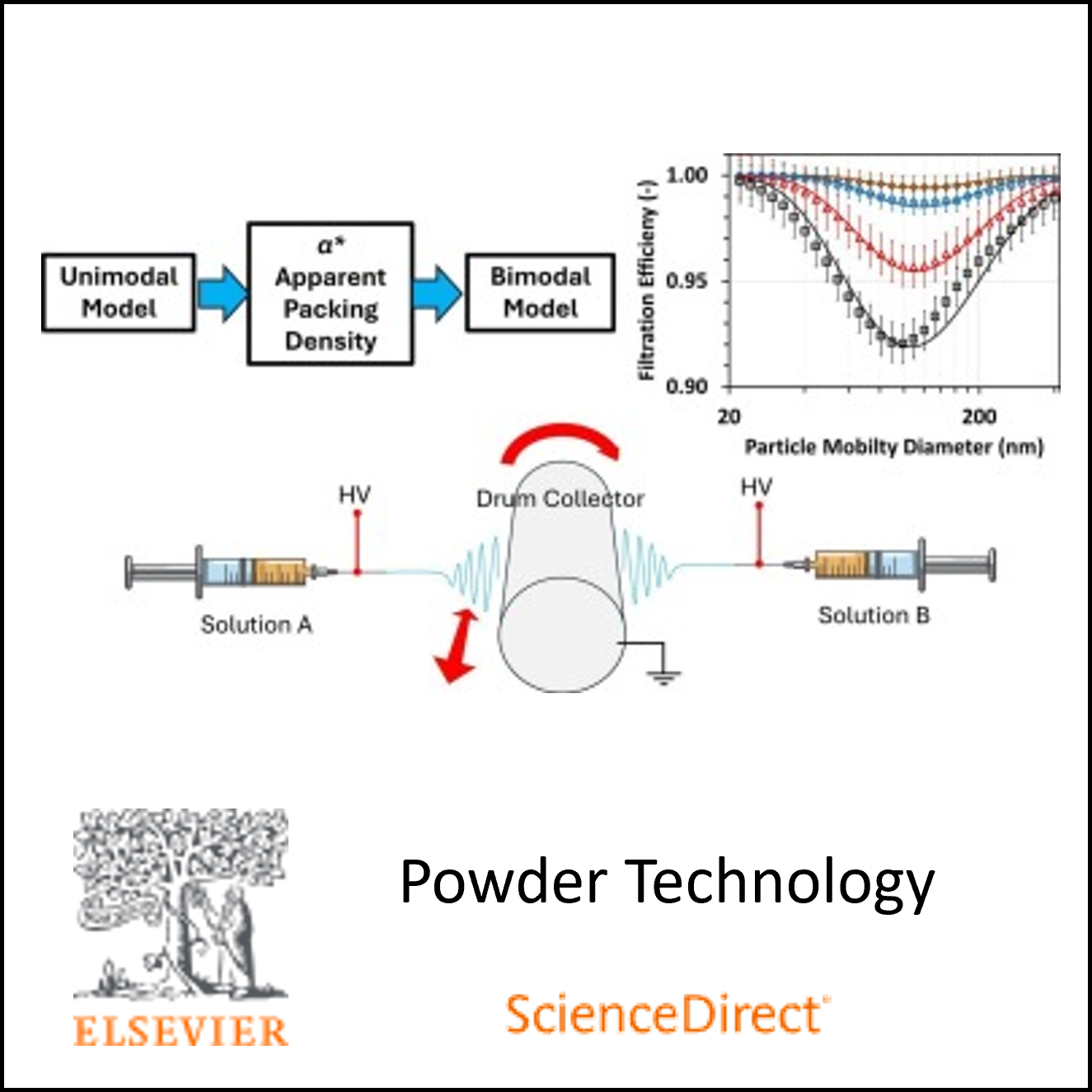
Nanofiber-based air filters are promising for efficient particulate matter removal, yet the use of unimodal models in bimodal fiber systems remains limited. This study examines electrospun nanofiber filters produced from polyacrylonitrile (PAN) in N,N-dimethylformamide (DMF) at 12 % w/w (Solution A) and 7.5 % w/w (Solution B), yielding coarse and fine fibers, as well as their bimodal composites (AxBy and BxAy) reinforced with nylon mesh. Scanning electron microscopy confirms that Solution A generates thicker fibers, influencing filtration performance. Pressure drop and filtration efficiency were evaluated across face velocities (0–25 cm/s) and particle sizes (10–500 nm) using established models (Brown, Davies, Ogorodnikov, Lee, Bian, Lee & Liu, Liu & Rubow, and Payet). To extend unimodal models to bimodal systems, a new parameter—apparent packing density—was introduced. Results show that the Bian model accurately predicts pressure drop (errors within ±5 %) by accounting for slip flow, while the Liu & Rubow model best fits filtration efficiency (errors within ±5 %), especially near the most penetrating particle size (MPPS, 100–200 nm). Incorporating apparent packing density enables precise predictions for bimodal membranes. Furthermore, composite fiber fractions significantly affect quality factors and MPPS, revealing trade-offs between efficiency and resistance. Overall, bimodal composites demonstrate superior performance, combining lower pressure drop with high capture efficiency. This study identifies the Bian and Liu & Rubow models, when applied with apparent packing density, as the most suitable approaches for bimodal nanofiber membranes, providing guidance for the design of next-generation air filtration systems.
Abstract

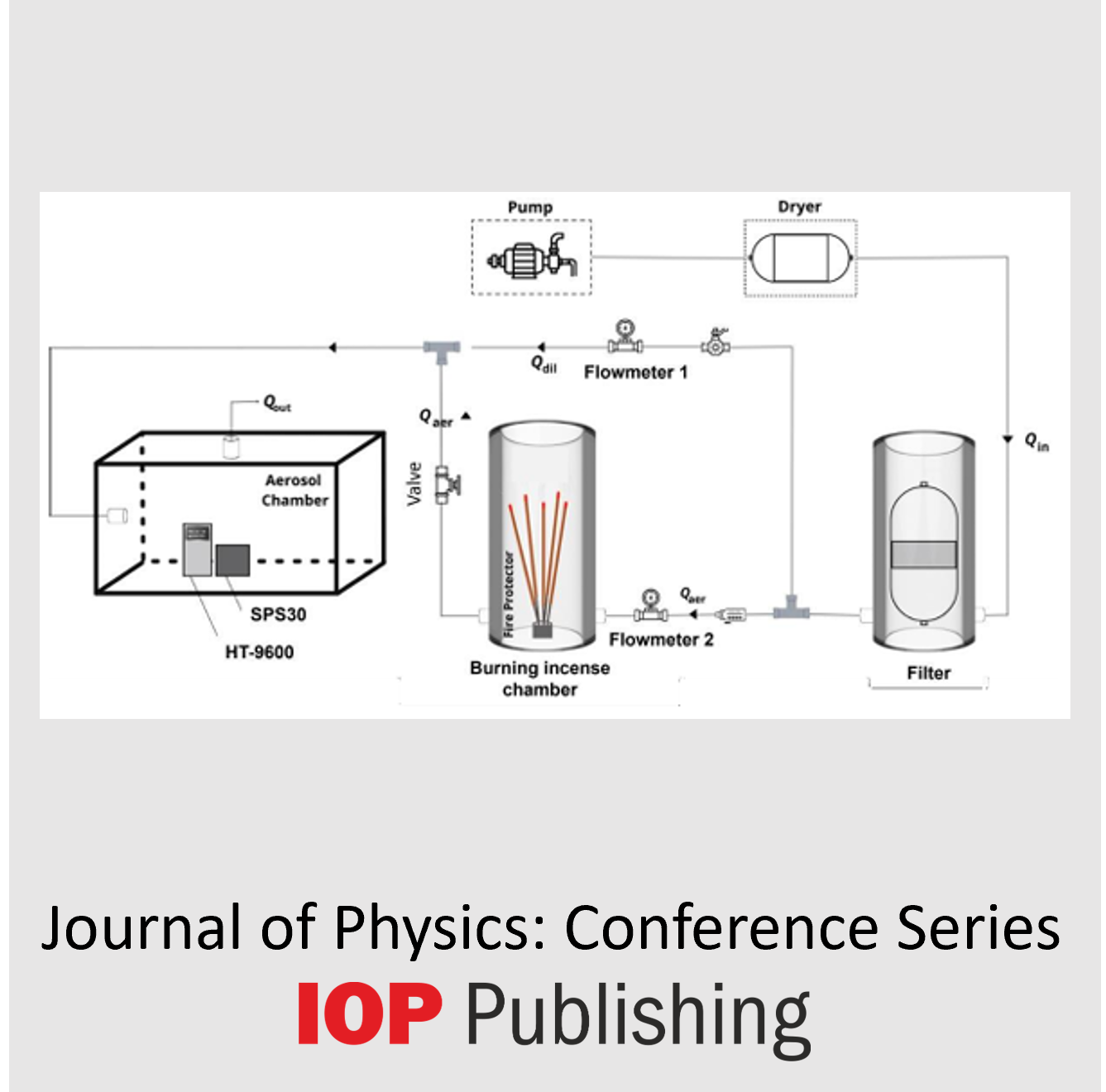
Air pollution, particularly particulate matter (PM), poses significant health risks and environmental challenges. Real-time air quality monitoring is crucial for effective management and mitigation strategies, especially in personal exposure contexts. Wearable devices, commonly utilizing low-cost optical PM sensors, offer a promising solution. However, these low-cost sensors often require recalibration to ensure accuracy and reliability. This study focuses on calibrating the SPS30 particulate matter sensor, a popular optical sensor, to improve its performance for wearable applications. The calibration process was conducted using the decay method in an aerosol chamber, aligning the SPS30’s readings with those of a reference sensor (HT-9600). The results demonstrated an excellent correlation between the SPS30 and the reference sensor for both PM2.5 and PM10 measurements. This study confirms that proper calibration can enhance the SPS30’s accuracy, making it a reliable tool for real-time, personal air quality monitoring, which is essential for public health and environmental management.
Abstract

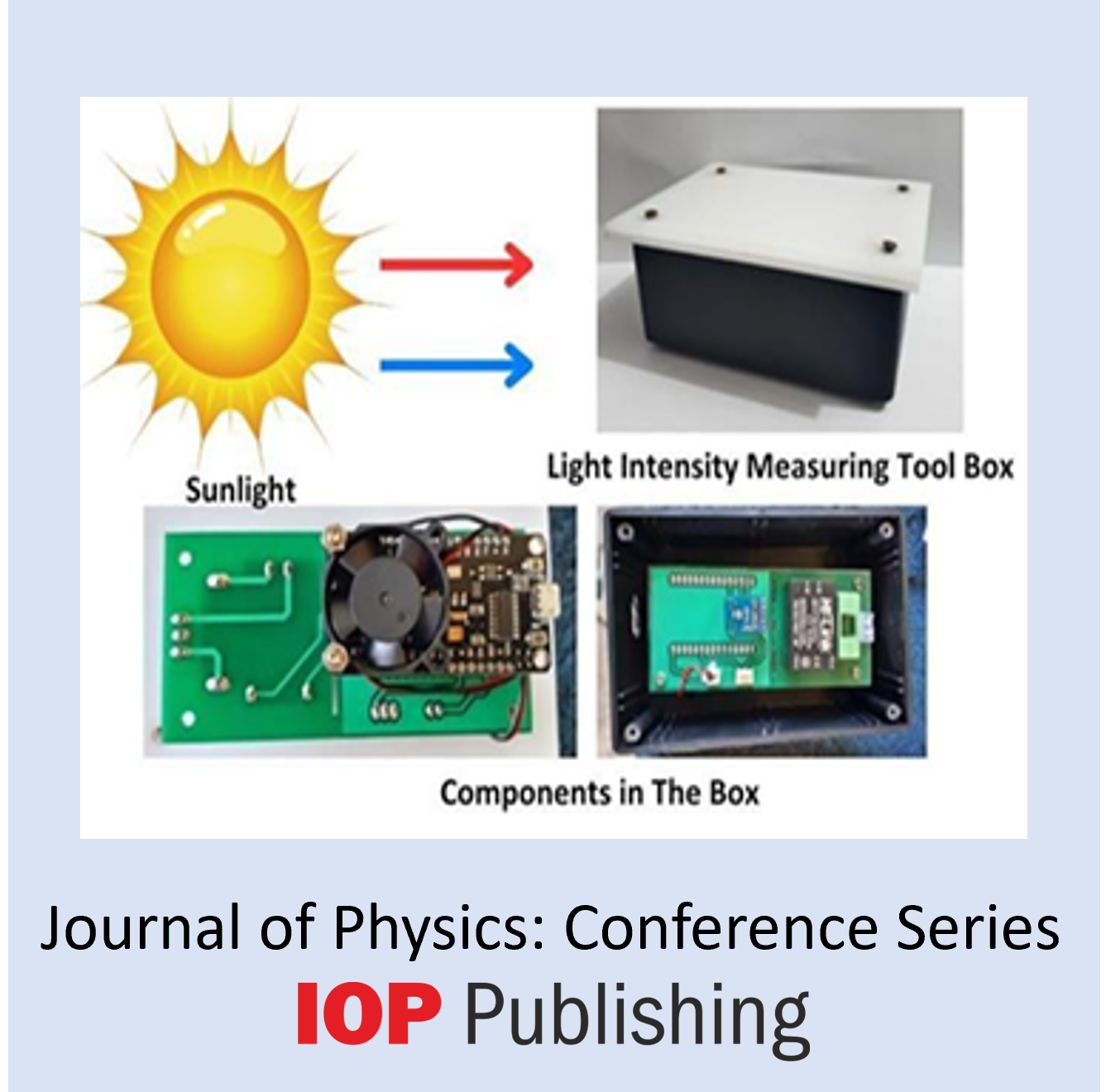
In this research, the potential energy produced by solar panels has been measured through the use of luminosity sensors. A system has been created to measure the potential of solar energy and electrical energy produced from a solar panel-based power generation system. The system consists of a microcontroller, luminosity sensor, current sensor and voltage sensor which is used in a solar power generation system of 800 WP. The measurement of potential energy from the light source is then compared with the electrical energy produced within the specified measurement time interval. From the results of measuring the luminosity of sunlight, it was found that the peak luminosity ranged between 132.556-149.485 Lux which is equivalent to 1.201-1.354 W/m2 with the highest average intensity of sunlight and solar radiation during the measurements being 140.003 Lux and 1.268 W/m2. From the measurement data The resulting electrical energy obtained the highest energy value of 2,2-4,0 kWh with an average of 3,1 kWh. This shows that the potential energy produced by a solar panel-based system can be obtained from luminosity measurements.
Abstrak

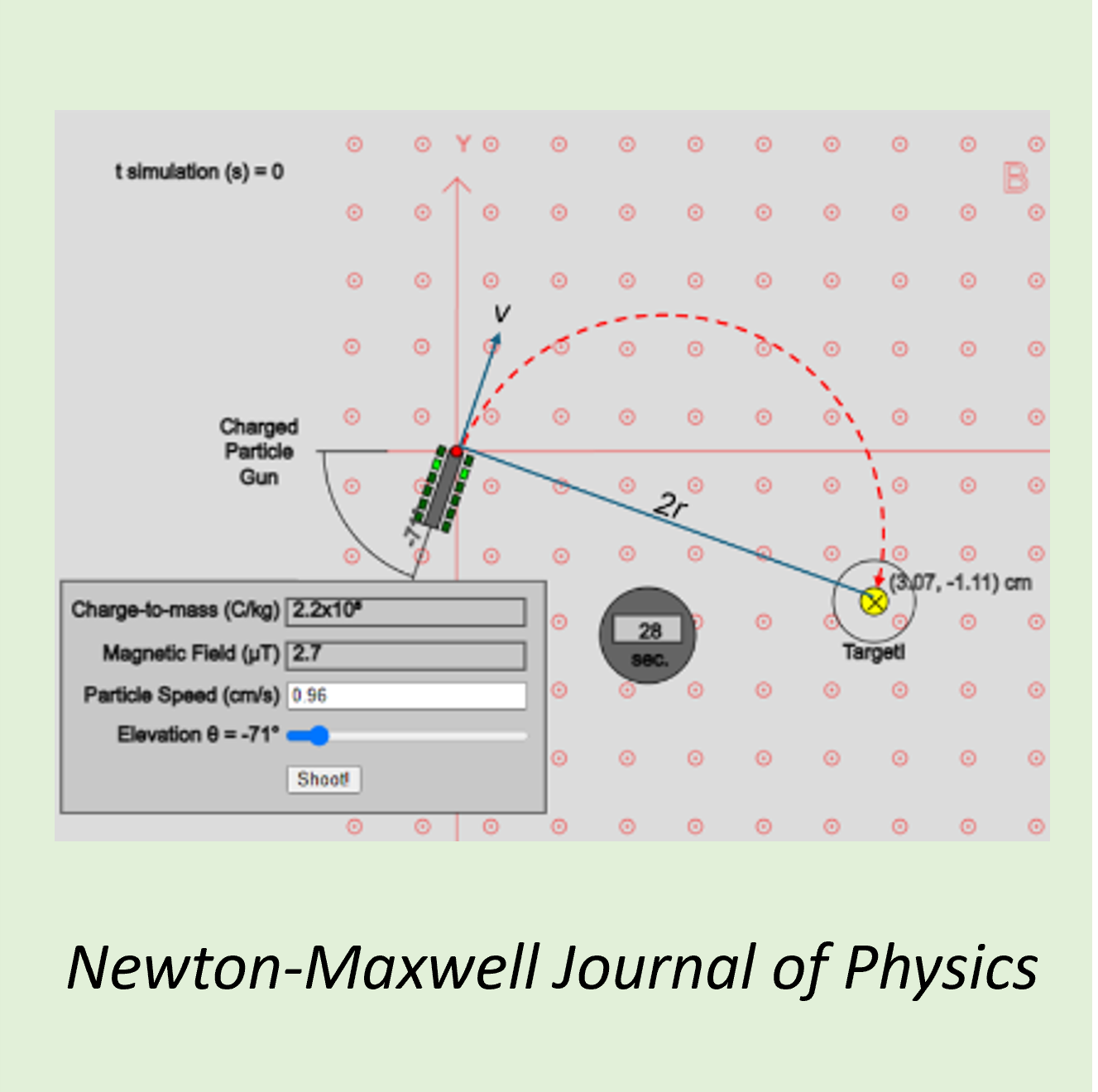
Penelitian ini menginvestigasi gerak partikel bermuatan dalam medan magnet melalui pendekatan numerik menggunakan metode Euler, serta implementasinya dalam simulasi berbasis web untuk tujuan edukasi.Penelitian sebelumnya telah menunjukkan bahwa pelajar mengalami kesulitan memahami konsep ini karena bersifat abstrak dan tidak intuitif secara visual.Dibandingkan metode lain seperti Runge-Kutta, metode Euler dipilih karena kalkulasinya yang lebih sederhana. Partikel bermuatan yang bergerak dalam medan magnet mengalami gaya Lorentz yang menyebabkan lintasan melingkar. Simulasi dikembangkan menggunakan pustakaP5.js, memungkinkan visualisasi dinamis gerak partikel. Hasil simulasi menunjukkan bahwa kesalahan integrasi meningkat dengan langkah waktu yang lebih besar, tetapi dapat diminimalkan dengan langkah yang lebih kecil. Pemilihan langkah waktu yang tepat diperlukan untuk menjaga akurasi visualisasi agar tidak terjadi kesalahan interpretasi. Integrasi simulasi ke dalam game edukasi berbasis web menunjukkan potensi sebagai alat bantu interaktif untuk pemahaman lebih mendalam tentang medan magnet dan gaya Lorentz.

Abstract

The Demand for electrical energy continues to increase. However, excessive electrical energy consumption can lead to tripped circuits and escalated costs. We developed a prioritised sockets system to avoid electrical trips and excessive power consumption. The PZEM-004T sensor in the master circuit can measure electrical power with deficient error, and the ACS712 sensor in the slave circuit can measure electrical current with an accuracy of 99.85%, making these sensors suitable for monitoring. Additionally, the non-priority sockets can interrupt the power flow when the power exceeds the limit while the priority socket remains active. The mobile application can display real-time historical data and control the switching of prioritised sockets. This system consists of 3 subsystems: the master circuit, the slave circuit, and the mobile application. The priority socket’s current cannot be interrupted. In contrast, the non-priority system can be interrupted when the electrical power load reaches 375 Watts. The mobile application controls the switching of prioritised sockets and monitors the incoming electrical power loads. They connected this system to the internet for proper functioning.
Abstract

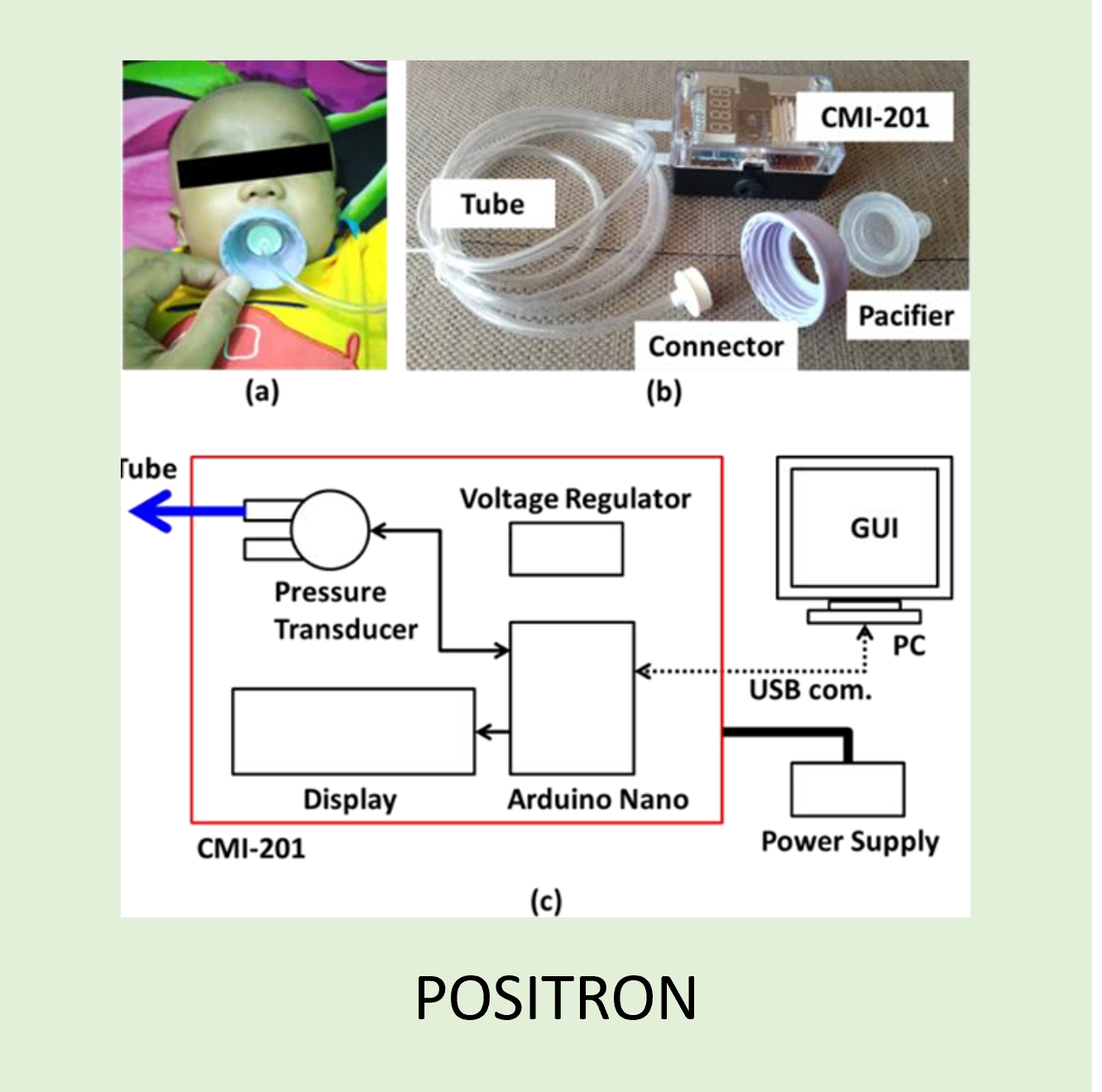
Sucking abilities are critical in early infant development, and the patterns of non-nutritive suck (NNS) have been found to potentially predict neurodevelopmental issues in the future. Proper NNS assessments are essential to ensure valid conclusions. Previous studies have shown that the level of infant arousal significantly affects NNS patterns. However, the author did not find any studies that observed the influence of infant hunger levels on NNS patterns. Therefore, this study aimed to develop an NNS assessment tool to characterize NNS patterns in infants with various hunger levels. The NNS assessment was conducted using a pressure transducer connected to a pacifier. The results showed that the level of hunger significantly affected the intra-burst frequency and the sucking pressure. The more hungry the infant, the more frequent the intra-burst frequency became, while the sucking pressure tended to decrease. The intra-burst frequency of infant sucking was 2.3, 2.46, and 2.5 Hz on average for a relative hunger index of 0.67, 0.83, and 1.0, respectively. The NNS pressure of infant sucking was 6.31, 4.51, and 2.62 kPa on average for a relative hunger index of 0.67, 0.83, and 1.0, respectively. This study's results suggest that during NNS assessments, the measurement time should consider the next feeding schedule for the infant.
Abstract

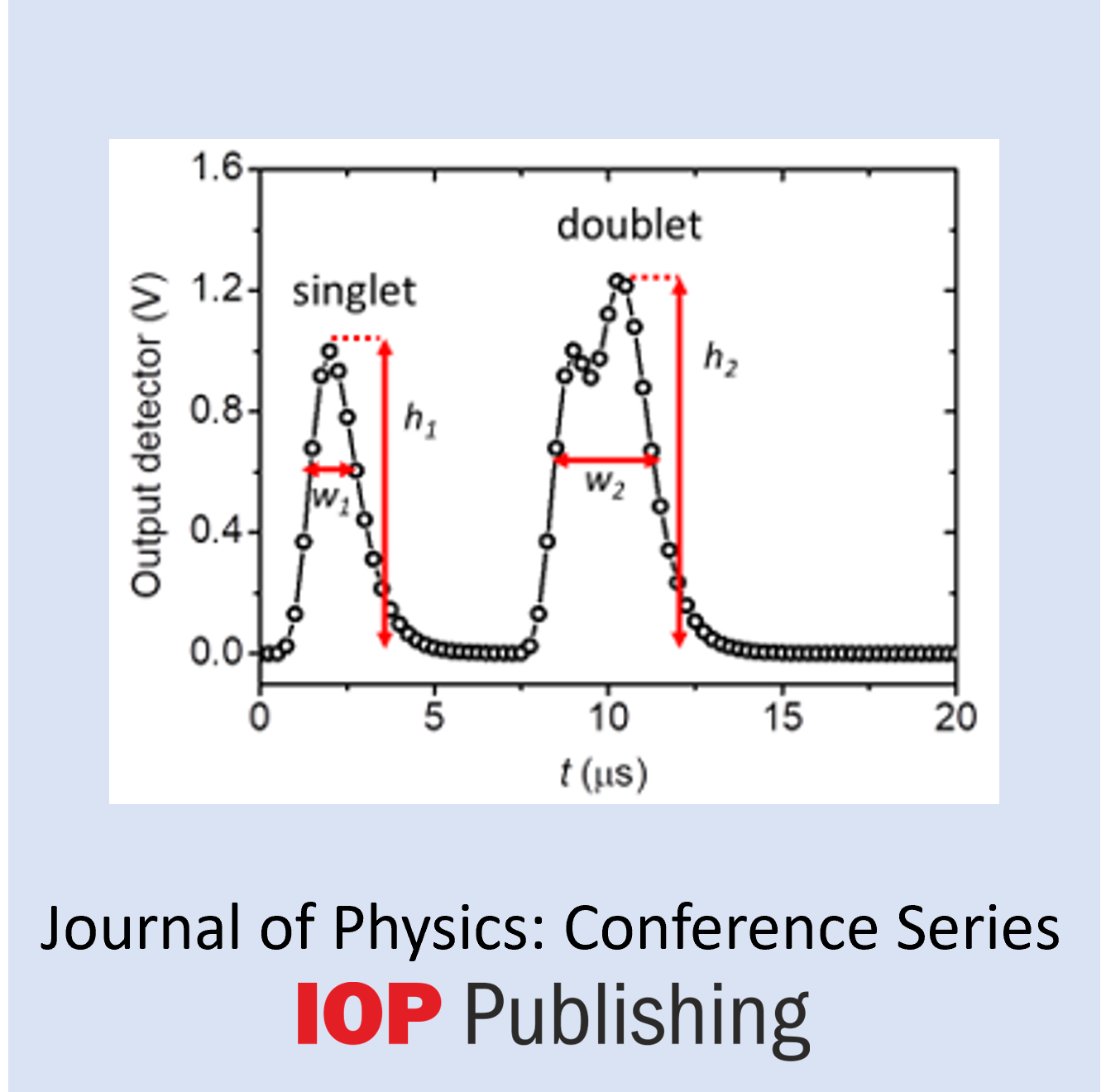
A pulse height analyzer (PHA) is used to measure the frequency distribution of the signal output height of an event detector. However, the typical PHA algorithm has limitations in measurement; it cannot distinguish multiplet due to coincidence and singlet pulse. Coincidences will pile up the signals that make the pulse height value higher than it should be. Therefore, this study has developed a simple algorithm to calculate pulse height distribution with coincidence correction (PHA-CC). The developed algorithm firstly identified the coincidence pulse by considering its pulse width. The result shows that the developed algorithm could successfully distinguish multiplet and singlet pulses. The significance of pulse height distribution measured by the PHA-CC compared to regular PHA was also discussed in this paper.
Abstract

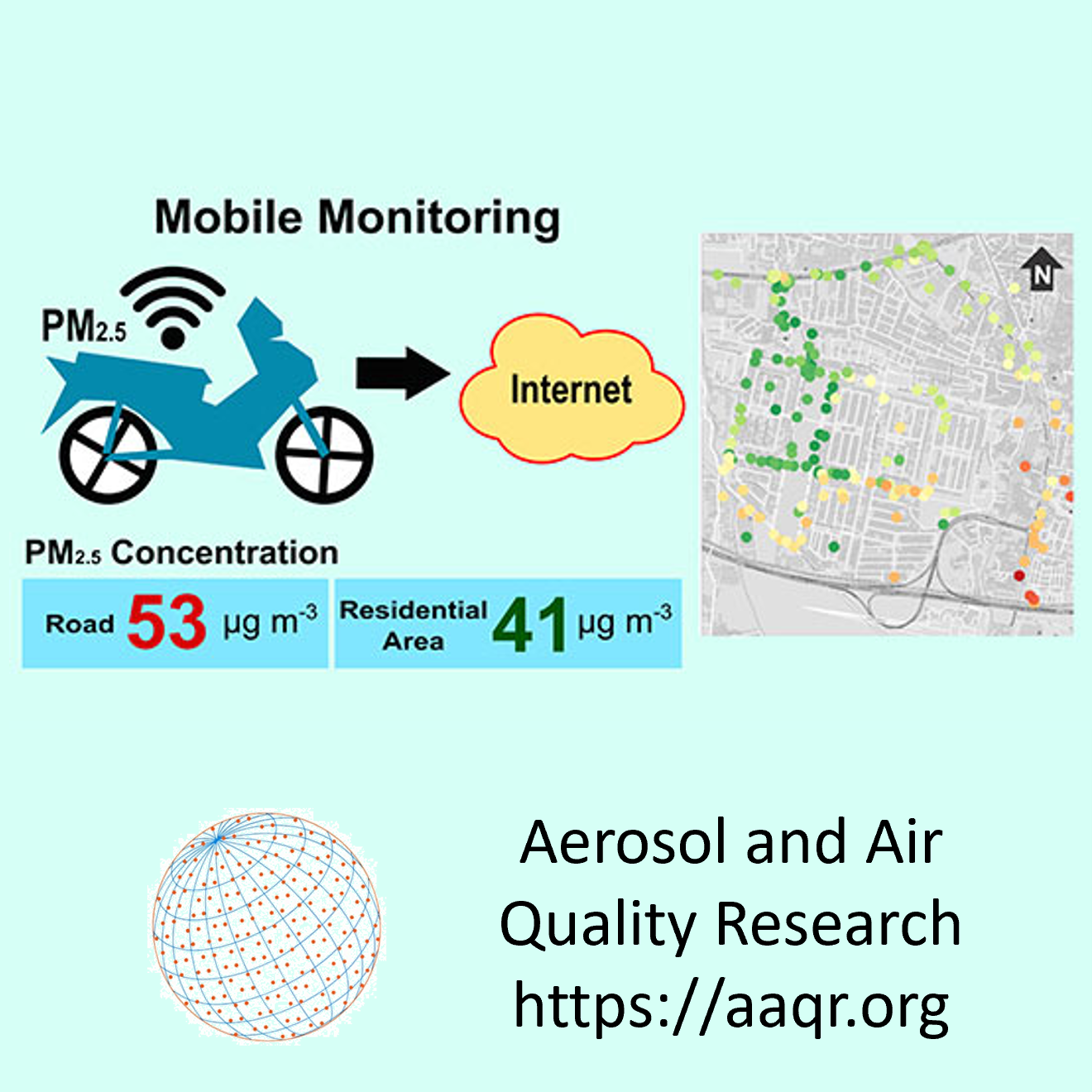
This study has developed a compact, low-cost, and real-time mobile monitoring (MM) device for estimating the PM2.5 inhaled dose. The MM device consists of a low-cost PM2.5 sensor, temperature and humidity sensor, Wi-Fi module, and microcontroller unit. The MM system (carried on vehicle) has been used to measure PM2.5 concentration, geolocation, and meteorological factors during rush hour. To examine repeatability, a new method was proposed to calculate the coefficient of variance of the PM2.5 sensor reading. We used several vehicle speeds to evaluate its dependency on the PM2.5 sensor reading. A sensor cover was also introduced to prevent the airspeed effect during carried on the vehicle. In this study, mobile monitoring was performing in several areas. The measured PM2.5 concentration then used for estimating PM2.5 inhaled dose. The Monte Carlo technique was used to introduce the probabilistic of body weight and PM2.5 concentration. The result shows that the coefficient of variation of the PM2.5 sensor reading was 2% on average in 2 minutes. We found that vehicle speed and sensor cover affects the standard deviation of PM2.5 sensor reading. Statistical analysis shows that the on-road area (53 µg m–3) has higher PM2.5 concentration than residential area (41 µg m–3). The area around the toll gate where many trucks pass has a higher concentration of PM2.5. In addition, low variability on the meteorological factors caused weak relationship with the PM2.5 concentration. We found that children were estimated to receive a higher inhaled dose of PM2.5 than adults. Therefore, variations in the microenvironment and local pollution sources such as truck and food stalls are dominant factors that affect spatial variation of PM2.5. Real-time mobile monitoring can help the government make policy and give warnings to people traveling around polluted areas.
Abstract

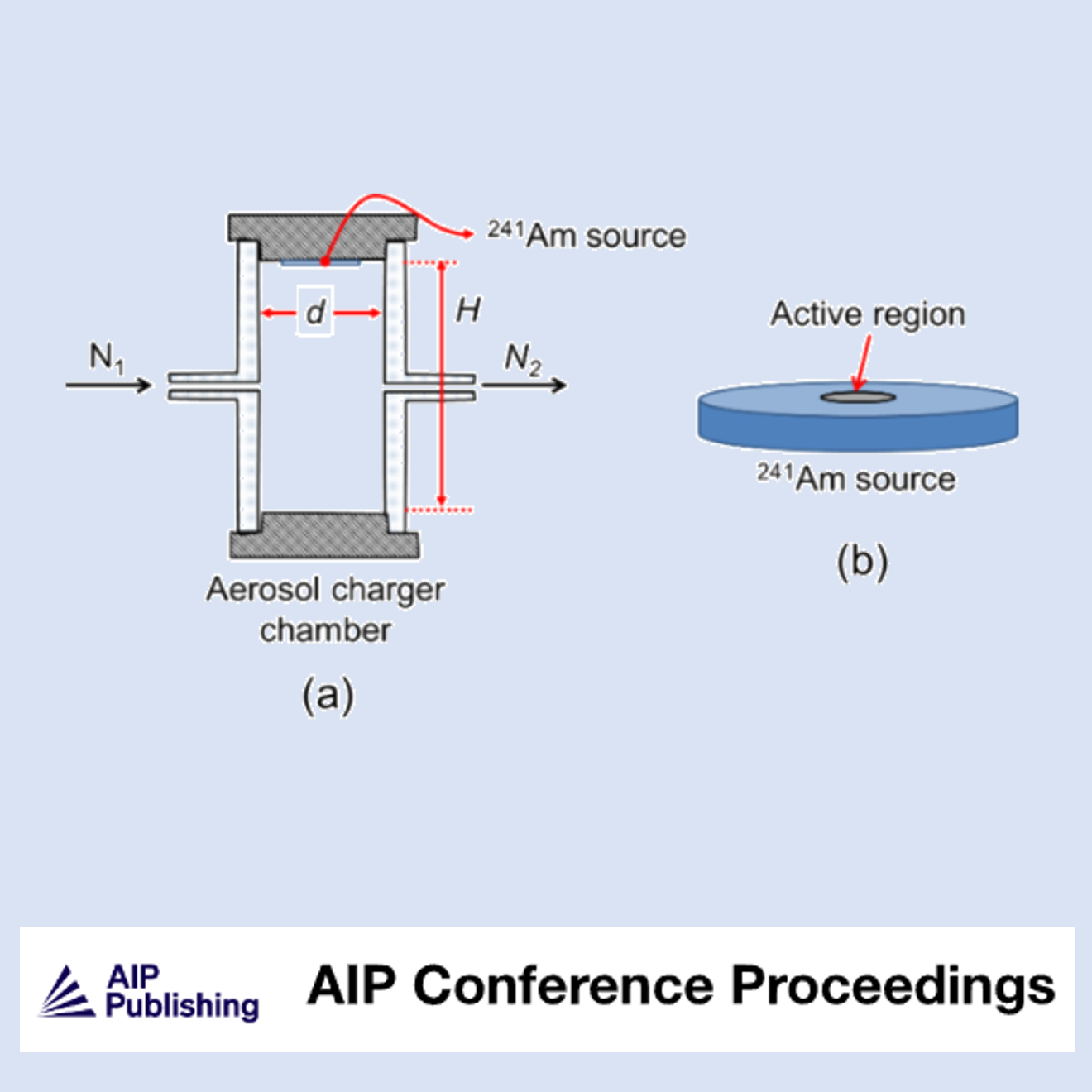
Using an aerosol charger based on a radioactive source remains a priority due to the stability and balance of the ions they produce. Furthermore, the utilization of radioactive sources requires intense caution. Subsequently, special treatment is needed in handling radioactive waste after the charger is no longer in use. Therefore, the lifespan of this type of charger must be considered. No recent study was conducted to estimate the lifespan by involving the contamination effect due to deposited particles. Compared to the effect of decreasing radioactive activity, the presence of particle deposition should be more significant in causing the decline in aerosol charger performance. Therefore, this paper purpose a simple model for estimating the lifespan of an aerosol charger based on radioactive sources. The developed model was assumed that when the deposited particles covered the active region, the effective activity of the radioactive source was decreased. The effective activity was determined by utilizing a Monte-Carlo simulation. The results show that particle penetration, particle diameter, and concentration significantly impact the aerosol charger lifespan. High penetration and low concentration are needed to achieve a long lifespan. The aerosol charger used for measuring small particles has a longer lifespan than for measuring large particles. The simulation results obtained that the aerosol charger based on the radioactive source used in this paper has a lifespan of approximately 700 days.
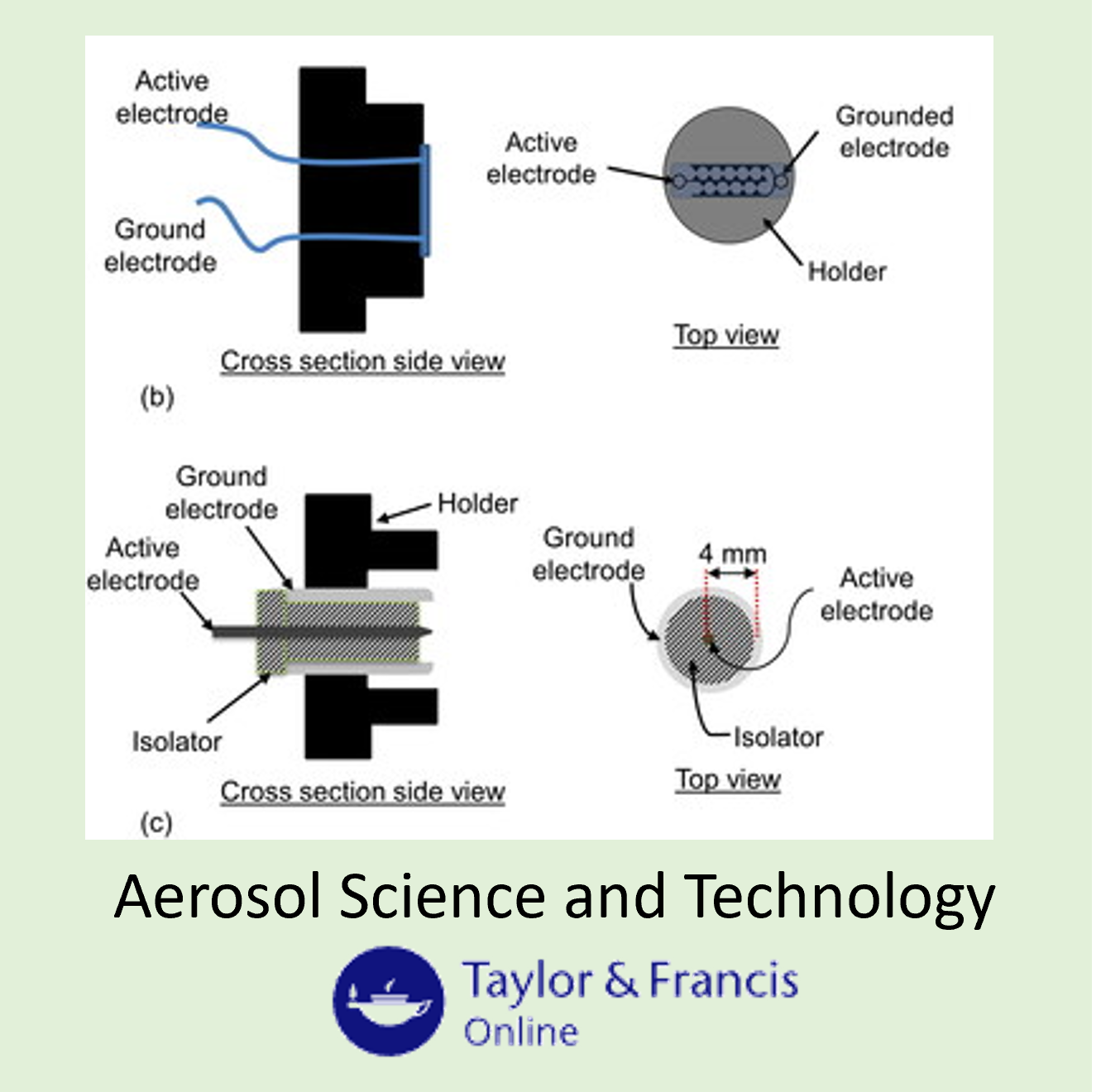
Abstract

The performance of a needle tungsten corona-discharge charger (NTCC) as a neutralizer in an electrospray aerosol generator (EAG) is compared to that of a surface-discharge micro-plasma aerosol charger (SMAC). We demonstrate the performance of an EAG with a reduction chamber that consists of a neutralizer. The ion produced by the neutralizer is characterized by measuring its ion properties utilizing an ion counter, a Faraday cup electrometer, and a mini-cyDMA. Both the SMAC and NTCC have balanced bipolar ions with ion concentration ratios of 0.95 and 1.07, respectively. While the diffusivity of the positive ions produced by the NTCC is more significant than that of the SMAC, it is the opposite for negative ions. The EAG system is evaluated by optimizing the EAG orifice diameter and carrier airflow rate. It was found that a maximum singly charged electrosprayed particle could be achieved at an orifice diameter and a carrier airflow rate of 10 mm and 1 L min−1, respectively. The performance of charge reduction is determined by a multiply to singly charged ratio. The NTCC neutralizer dramatically reduced the highly charged electrosprayed particle to below 10 elementary charges. In brief, the result shows that the NTCC performs better than the SMAC in reducing multiply charged particles.
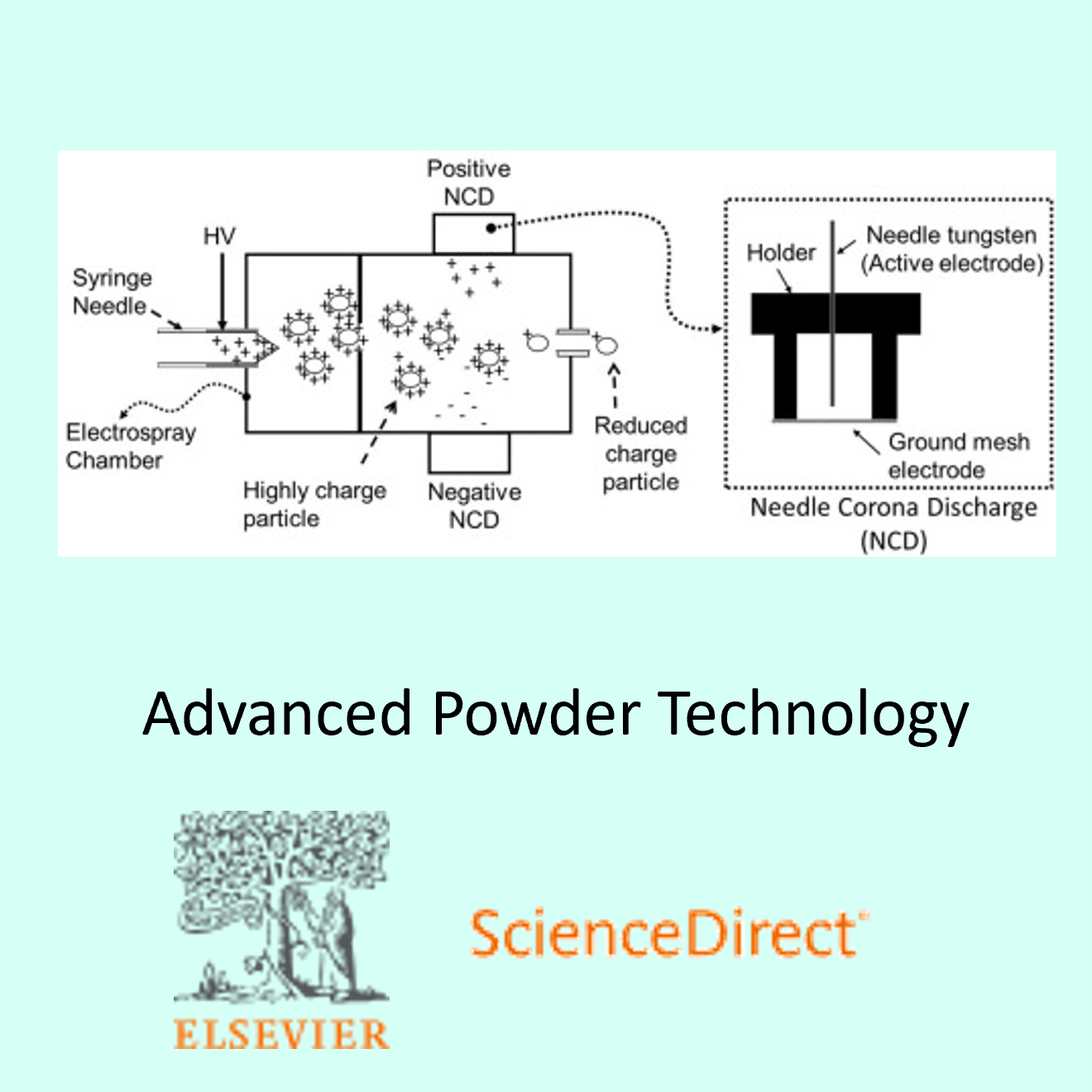
Abstract

The performances of dual needle corona discharge (NCD) as bipolar ion source to neutralize the electrospray (ES) particles were characterized and optimized. The NCD was constructed from a tungsten needle and grounded mesh electrode in the needle-to-plane configuration. The dual NCD created a bipolar ion environment by mixing the balanced concentration of positive and negative ions produced by each NCD. The dual NCD was placed in an electrospray aerosol generator (EAG) apparatus to reduce the charge state of the ES particles. Polystyrene latex (PSL) suspensions having the particle size range of 96–256 nm were used as the precursor solution for the electrospray process. Some characterizations to the NCD were carried out to obtain optimum operating voltage and air flow rate. The size distribution and charge fraction of the electrospray PSL (ES-PSL) particles exiting the EAG were also investigated. The result showed the dual NCD could generate stable bipolar ions by mixing positive and negative ions with balanced concentration. The bipolar ions from the dual NCD were capable of neutralizing and reducing the charge state of highly charged ES-PSL particles larger than 100 nm. The EAG, equipped with the dual NCD, could generate ES-PSL particles with stable concentration and consistent size distribution. The charge fraction calculation of the ES-PSL particles showed that more than 80% of the particles exiting the EAG were positively charged.
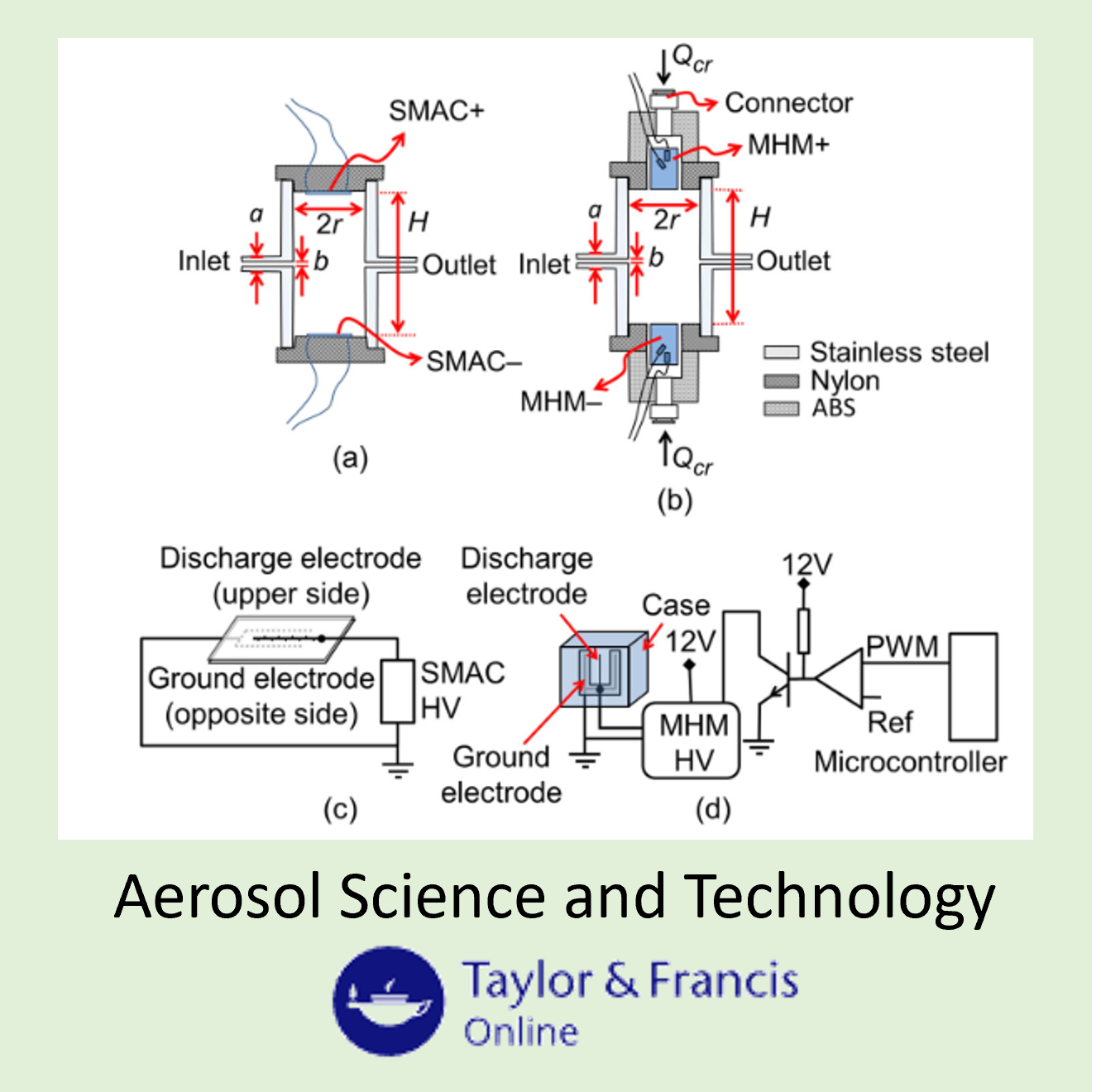
Abstract

We developed an aerosol charger that incorporated commercial ionizers to make the setup simple and easily replicated. The built-in high-voltage source for inducing corona discharge embedded in the developed charger (MHM charger) was modulated with pulses so the production of positive and negative ions could be independently regulated. We have studied several attempts to evaluate the performance of the MHM charger as a bipolar charger for charging ultrafine particles. We found that by adjusting the duty-cycle of the modulated pulses, positive and negative ion production is manageable, and the ion concentration depends on the flow rate of the intake air. We used a mini-cyDMA to measure the mobility distribution of positive and negative ions with an average of 1.09 and 1.67 cm2 V−1 s−1, respectively. By utilizing initially charged and neutral particles, we obtained the penetration ratio of both particles: 0.75 and 0.774, respectively. The issue of the MHM charger to generate new particles was also investigated. We found that, on average, the produced new particle concentration was only 5.2 cm−3. In this study, we evaluated the performance of the MHM charger to charge particles by measuring the neutral fraction and charging efficiency. The neutral fraction with particle loss correction follows the established model. The intrinsic and extrinsic charging efficiencies at 100 nm were up to 19% and 41%, respectively. We also assessed the application of the MHM charger in the monodisperse particle generator system. The results showed that the MHM charger could be utilized as an alternative aerosol charger.

Publications
Invensi ini ini mengenai metode untuk melakukan rekomendasi ekspansi lahan pertanian berbasis model jaringan syaraf tiruan dengan kalibrasi sensor komersial, lebih khusus lagi. Tujuan utama dari invensi ini adalah untuk menyediakan suatu metode rekomendasi ekspansi lahan pertanian yang mengintegrasikan model jaringan syaraf tiruan (JST) dengan kalibrasi sensor komersial sehingga dapat meningkatkan akurasi data hara tanah dan menghasilkan rekomendasi kelayakan lahan yang lebih objektif. Metode tersebut yang dicirikan dengan langkah-langkah: (a) mengumpulkan data keluaran sensor komersial yang belum terkalibrasi dari lahan eksisting dan lahan ekspansi; (b) memasukkan data keluaran sensor tersebut ke dalam model kalibrasi jaringan syaraf tiruan yang telah dilatih untuk menghasilkan nilai unsur hara terkalibrasi; (c) melakukan interpolasi spasial menggunakan data unsur hara terkalibrasi dan geolokasi titik pengukuran untuk membentuk peta distribusi hara; (d) memasukkan data unsur hara terkalibrasi dan parameter lingkungan ke dalam model jaringan syaraf tiruan rekomendasi ekspansi yang telah dilatih untuk menghasilkan rekomendasi kelayakan ekspansi serta estimasi produktivitas; dan (e) menggabungkan peta distribusi hara dengan rekomendasi kelayakan ekspansi untuk menghasilkan peta distribusi rekomendasi ekspansi lahan pertanian. No. Permohonan: S00202514466
Invensi ini mengenai Pemurni Udara dengan Sistem Pengion Ganda dan Plat Sejajar untuk Pengendapan Partikulat, lebih khusus lagi, invensi ini berhubungan dengan sistem pemurni udara berbasis ionisasi dan pengendapan elektrostatik, yang tidak hanya membersihkan udara di dalam perangkat tetapi juga memengaruhi partikulat di lingkungan sekitar. Suatu pemurni udara sesuai dengan invensi ini terdiri dari: peniup udara (1) untuk menarik udara kotor dari lingkungan, ruang ionisasi awal (3) yang dilengkapi dengan pengion pertama (5) untuk memberikan muatan pada partikulat, saluran serpentin (multi-pass) dengan lipatan U (7) yang dilengkapi dengan plat sejajar (8) dan (9), dimana plat (8) dihubungkan ke tanah/sasis dan plat (9) diberi tegangan listrik positif atau negatif sehingga menimbulkan medan listrik untuk mengendapkan partikulat bermuatan, ruang ionisasi akhir (10) yang dilengkapi dengan pengion kedua (12) untuk memberikan muatan pada udara bersih sebelum dilepaskan ke lingkungan, dan celah keluaran (11, 14) untuk mengeluarkan udara bersih terionisasi kembali ke lingkungan, yang dicirikan dengan adanya konfigurasi saluran serpentin (multi-pass) dengan lipatan U yang memperpanjang retensi udara dalam medan listrik sehingga efisiensi pengendapan partikulat meningkat. No. Permohonan: S00202510146
TrapGradien, sebuah sistem pemurni udara berbasis ionizer dan presipitasi elektrostatik yang terintegrasi dengan teknologi AIoT untuk pemantauan kualitas udara dan pemeliharaan prediktif. Ionizer pada sistem TrapGradien menghasilkan ion positif dan negatif untuk mengionisasi aerosol di udara kotor (upstream), sehingga sebagian besar partikel menjadi bermuatan. Selanjutnya, presipitator elektrostatik menangkap partikel bermuatan tersebut, mengubah udara kotor menjadi udara bersih (downstream). Pada tahap downstream, ionizer tambahan digunakan untuk memproduksi ion negatif yang dilepaskan ke lingkungan, memberikan efek muatan pada aerosol di sekitar. Hal ini mempermudah deposisi partikel di lingkungan karena partikel yang bermuatan cenderung menempel pada permukaan. Selain itu, TrapGradien dilengkapi dengan teknologi AIoT untuk memantau kualitas udara secara realtime dan melakukan pemeliharaan prediktif, memastikan kinerja sistem tetap optimal.
Sistem pembaca data universal yang memungkinkan penarikan data dari tampilan LCD/LED 7 segmen pada perangkat ukur konvensional secara non-invasif. Pendekatan ini menggunakan teknologi pemrosesan gambar untuk mengenali dan menerjemahkan tampilan perangkat konvensional menjadi data yang dapat diakses dan dimanfaatkan secara luas. Sistem ini sebagai alternatif metode invasif seperti pengambilan sinyal analog sensor sebelum diproses oleh kontroler atau prosesor perangkat, yang mana cenderung dapat merusak atau setidaknya memberi bias/eror pada perangkat itu sendiri. Dengan sistem ini perangkat konvensional dapat diintegrasikan dengan sistem digital, Internet of Things (IoT), atau teknologi lainnya.
AirGradien adalah sebuah sistem wearable yang dirancang untuk pemantauan kualitas udara secara personal. Sistem ini dilengkapi dengan berbagai sensor yang dapat mengukur partikel udara (Particulate Matter/PM), suhu, kelembaban, tekanan udara, dan senyawa organik volatil (Volatile Organic Compounds/VOC) secara real-time. Data yang dihasilkan dari sistem ini akan divisualisasikan dan dapat dipetakan, memungkinkan pengguna untuk memantau kualitas udara di sekitar mereka secara akurat dan langsung. AirGradien juga terintegrasi dengan teknologi Internet of Things (IoT) sehingga memungkinkan pemantauan dan pengendalian jarak jauh.
Teman.AL adalah smartwatch yang dapat digunakan untuk membantu memantau dan melacak lokasi pengidap demensia dan alzheimer setiap saat. Teman.AL ini dikembangkan sebagai langkah preventif untuk keluarga dan dokter agar dapat memantau perilaku berisiko dari pengidap.
Sistem Pembaca Data Universal berbasis Aplikasi Multiplatform yang dapat digunakan untuk membaca data dari tampilan Perangkat Ukur Konvensional. Tujuan dari aplikasi ini adalah untuk Mendukung Digitalisasi dan Integrasi dengan Teknologi lainnya.
Program Komputer Graphical User Interface untuk AUGV Monitoring System berbasis Bahasa Pemrograman Phyton
Sistem Monitoring Electrical Bike (e-bike monitoring) berbasis GPS dan IoT adalah sistem monitoring dan tracking parameter kelistrikan dan posisi geografis motor listrik berbasis GPS menggunakan aplikasi berbasis Website. Aplikasi ini dirancang agar pengguna dapat monitoring level baterai dan tracking posisi e-bike setiap saat. Website juga dirancang agar memudahkan pengguna untuk membuka melalaui smartphone. Selain itu, pengguna juga dapat mencegahnya potensi pencurian motor listrik dengan adanya fitur notifikasi untuk mengingatkan pengguna dalam memantau motor listrik saat status motor dalam keadaan terkunci atau tidak. Selain itu, perpindahan posisi sedang motor tidak menyala dan notifikasi peringatan untuk keadaan baterai saat baterai penuh, hampir habis dan habis.
Website Teman.AL adalah aplikasi web untuk membantu memantau dan melacak lokasi pengidap demensia dan alzheimer setiap saat. Aplikasi web ini dikembangkan sebagai langkah preventif untuk keluarga dan dokter agar dapat memantau perilaku berisiko dari pengidap.
Aplikasi Teman.AL adalah aplikasi android yang dapat digunakan untuk membantu memantau dan melacak lokasi pengidap demensia dan alzheimer setiap saat. Aplikasi ini dikembangkan sebagai langkah preventif untuk keluarga dan dokter agar dapat memantau perilaku berisiko dari pengidap.
Aplikasi AirGradien dirancang untuk pemantauan kualitas udara dan pelacakan aktivitas secara personal. Aplikasi ini terhubung dengan perangkat AirGradien, sebuah sistem wearable yang memantau paparan polusi udara secara individual. Melalui aplikasi ini, pengguna dapat dengan mudah mengakses informasi tentang kualitas udara di sekitar mereka selama menjalani aktivitas sehari-hari.
Invensi ini mengenai Sistem Deteksi Pergerakan Tanah berbasis Serat Optik dan Internet of Things, lebih khusus lagi, invensi ini berhubungan dengan suatu sistem yang dapat digunakan untuk mendeteksi pergerakan tanah sehingga dapat digunakan untuk keperluan deteksi longsor. Invensi ini berbasis internet of things (IoT) sehingga data pengukuran dapat dipantau dari manapun dan kapanpun dengan koneksi internet dan oleh siapa pun yang memiliki otoritas. Dalam invensi ini, serat optik dimanfaatkan sebagai sensor. Invensi ini juga termasuk mekanisme untuk membuat serat optik menjadi lebih bengkok bahkan hingga patah saat terjadi pergeseran tanah. No. Paten: IDS000012712
Simulator Longsor merupakan perangkat yang dapat digunakan untuk mensimulasikan proses longsoran tanah. Simulator Longsor ini memiliki kemampuan untuk mengatur kemiringan secara otomatis.
Sebuah merek aquaponik
SiOBE adalah sebuah aplikasi berbasis web yang dirancang khusus untuk mendukung proses administrasi dan pelaksanaan Outcome-Based Education (OBE). Aplikasi ini bertujuan untuk membantu institusi pendidikan dalam mengelola dan melacak berbagai aspek yang terkait dengan implementasi OBE, termasuk pemetaan capaian pembelajaran dan rekam jejak dan transkrip hasil belajar mahasiswa.
Abstract This study presents a low-cost landslide monitoring system that integrates Optical Time Domain Reflectometry (OTDR), ESP32-CAM–based digit recognition, LoRa communication, and a solar-powered IoT platform for real-time ground-movement detection. The system utilizes an OTDR (SGOT04) connected to fiber optic cables installed along the monitored slope, while the ESP32-CAM performs both OTDR data acquisition and numerical extraction from the device’s 7-segment display using a lightweight threshold-based segmentation method. The processed data are transmitted using LoRa RFM95 and visualized through a cloud dashboard for remote monitoring. System performance was evaluated through controlled laboratory and field-simulated tests. LoRa transmission demonstrated low packet loss across distances up to 150 m, with a 24-hour reliability test yielding only 1.08% data loss and 2.74% digit-recognition misreads. Comparative analysis between the SGOT04 and a reference OTDR (Yokogawa AQ1000) showed near-perfect linearity up to 5000 m, validating the accuracy of the low-cost device for cable-length measurement. A landslide simulation test using a droplet-loop fiber-breaking mechanism successfully triggered a detectable cable disruption at a slope angle of 36.9°, reflected by a sudden change in measured cable length from 1043 m to 1026 m. These results demonstrate that the proposed OTDR-IoT system provides accurate, stable, and cost-effective monitoring of ground movement and can serve as a promising early-warning solution for landslide-prone areas. Future improvements include advanced filtering, enhanced power optimization, and long-term field deployment. View at Publisher
Abstract Accurate measurement of phase and amplitude differences between input and output signals is essential in characterizing dynamic behaviour in electrochemical and optical instrumentation systems. In this study, an In-phase and Quadrature (I/Q) demodulation technique is implemented as a method for extracting both phase shift and amplitude ratio under noisy signal conditions. The system demodulates the measured signal using two orthogonal reference signals at 0° (in-phase) and 90° (quadrature), enabling the extraction of real-time phase and amplitude information. The analog front-end consists of a phase-sensitive detector and a low-pass filter to suppress high-frequency components. The filtered outputs are digitized using a high-resolution ADC after appropriate level shifting. Experimental results demonstrate that the proposed system achieves reliable signal recovery with good tolerance to noise up to 20 dB. Beyond this threshold, the recovered signals exhibit substantial deviations, resulting in unacceptable errors in amplitude and phase estimation. Furthermore, validation through EIS measurements shows that the system is able to reproduce Nyquist responses in good agreement with theoretical predictions. In addition to its measurement capability, the developed system also supports laboratory-based learning by providing a practical framework for understanding AC circuits, spectral impedance analysis, and complex-number data processing. View at Publisher
Abstract This study presents the design, integration, and performance evaluation of a controlled rainfall simulator developed as an add-on for a landslide simulation system. The simulator generates rainfall intensities from 0 to 20 mm/h, adjustable via a web interface, and operates using six spraying cycles per hour. Each cycle employs ON/OFF control with volume-based feedback: the pump runs until the accumulated volume reaches the predefined target, then stops automatically. A Proportional–Integral (PI) controller maintains a stable flow rate of 2 L/min to ensure consistent spray performance. The device is fully integrated with the landslide simulator chamber, enabling controlled rainfall experiments on various slope configurations. Experimental results show that the system maintains rainfall intensity with a volume error below 5% across all tests. However, the distribution uniformity remains below 80%, indicating the need for nozzle configuration improvements for applications requiring higher homogeneity. Overall, the system enhances the capability of landslide simulation experiments and supports research in soil stability and hydrological processes. View at Publisher
Abstract The rapid advancement of autonomous systems has driven the development of intelligent navigation technologies across various fields, including transportation, robotics, and environmental monitoring. However, many autonomous ground vehicle platforms rely on high-cost sensors and complex system architectures, limiting their accessibility for research and education purposes. To address this challenge, this study proposes a cost-effective miniature Unmanned Ground Vehicle (UGV) integrating a Neo Ublox M8N GPS module with a four-sided ultrasonic sensing system to support real-time navigation and local obstacle awareness. The proposed system combines global positioning data with multi-directional short-range distance detection, processed through a Raspberry Pi and visualized via a web-based platform for real-time monitoring. Experimental testing was conducted under controlled outdoor and indoor conditions to evaluate GPS positioning accuracy, ultrasonic detection performance, and overall system responsiveness. The Neo Ublox M8N module achieved an average positional error of 4.35 m, corresponding to an accuracy of 97.4%, representing an improvement over previous studies using low-cost GPS receivers without algorithmic enhancement. Meanwhile, the ultrasonic sensors demonstrated reliable obstacle detection within a range of 5–70 cm, with an error of less than 1% and stable readings across all four sides of the UGV. The integration of these two sensing modalities demonstrated effective coordination between global and local navigation tasks, enabling real-time path visualization and obstacle awareness. Overall, the findings indicate that the proposed miniature UGV provides a scalable, low-cost platform suitable for research, prototyping, and education applications in autonomous navigation. This work also contributes practical insights for developing intelligent sensing architectures in small-scale robotic systems and highlights opportunities for further enhancements through sensor fusion and autonomous control strategies. View at Publisher
Abstract A community service, initiated by the Department of Physics Engineering at Telkom University, addresses the issue of plastic pollution in Lengkong subdistrict, Bandung. Through educational lectures, impactful sanitation activities, and advanced waste management technologies—including partnerships with international organizations—this initiative endeavors to resolve the pressing problem of plastic waste. Among the techniques employed are interactive cleanup days, educational lectures on recycling, and the application of cutting-edge technologies such as incinerators and imidazolium ionic liquids. The partnership with Plastic Fischer Germany, which actualizes SDG 17 (Partnerships for the Goals) and provides advanced technology and global expertise, was crucial for the program's success. The outcomes indicate a reduction in plastic waste, heightened environmental awareness, and the successful implementation of sustainable methods. This study concludes that achieving significant environmental change necessitates the integration of academic research with global cooperation and community engagement. The program's impact can be sustained and amplified through further expansion, ongoing education, and enhanced collaboration. View at Publisher
Abstract Nanofiber-based air filters are promising for efficient particulate matter removal, yet the use of unimodal models in bimodal fiber systems remains limited. This study examines electrospun nanofiber filters produced from polyacrylonitrile (PAN) in N,N-dimethylformamide (DMF) at 12 % w/w (Solution A) and 7.5 % w/w (Solution B), yielding coarse and fine fibers, as well as their bimodal composites (AxBy and BxAy) reinforced with nylon mesh. Scanning electron microscopy confirms that Solution A generates thicker fibers, influencing filtration performance. Pressure drop and filtration efficiency were evaluated across face velocities (0–25 cm/s) and particle sizes (10–500 nm) using established models (Brown, Davies, Ogorodnikov, Lee, Bian, Lee & Liu, Liu & Rubow, and Payet). To extend unimodal models to bimodal systems, a new parameter—apparent packing density—was introduced. Results show that the Bian model accurately predicts pressure drop (errors within ±5 %) by accounting for slip flow, while the Liu & Rubow model best fits filtration efficiency (errors within ±5 %), especially near the most penetrating particle size (MPPS, 100–200 nm). Incorporating apparent packing density enables precise predictions for bimodal membranes. Furthermore, composite fiber fractions significantly affect quality factors and MPPS, revealing trade-offs between efficiency and resistance. Overall, bimodal composites demonstrate superior performance, combining lower pressure drop with high capture efficiency. This study identifies the Bian and Liu & Rubow models, when applied with apparent packing density, as the most suitable approaches for bimodal nanofiber membranes, providing guidance for the design of next-generation air filtration systems. View at Publisher
Abstract Air pollution, particularly particulate matter (PM), poses significant health risks and environmental challenges. Real-time air quality monitoring is crucial for effective management and mitigation strategies, especially in personal exposure contexts. Wearable devices, commonly utilizing low-cost optical PM sensors, offer a promising solution. However, these low-cost sensors often require recalibration to ensure accuracy and reliability. This study focuses on calibrating the SPS30 particulate matter sensor, a popular optical sensor, to improve its performance for wearable applications. The calibration process was conducted using the decay method in an aerosol chamber, aligning the SPS30’s readings with those of a reference sensor (HT-9600). The results demonstrated an excellent correlation between the SPS30 and the reference sensor for both PM2.5 and PM10 measurements. This study confirms that proper calibration can enhance the SPS30’s accuracy, making it a reliable tool for real-time, personal air quality monitoring, which is essential for public health and environmental management. View at Publisher
Abstract In this research, the potential energy produced by solar panels has been measured through the use of luminosity sensors. A system has been created to measure the potential of solar energy and electrical energy produced from a solar panel-based power generation system. The system consists of a microcontroller, luminosity sensor, current sensor and voltage sensor which is used in a solar power generation system of 800 WP. The measurement of potential energy from the light source is then compared with the electrical energy produced within the specified measurement time interval. From the results of measuring the luminosity of sunlight, it was found that the peak luminosity ranged between 132.556-149.485 Lux which is equivalent to 1.201-1.354 W/m2 with the highest average intensity of sunlight and solar radiation during the measurements being 140.003 Lux and 1.268 W/m2. From the measurement data The resulting electrical energy obtained the highest energy value of 2,2-4,0 kWh with an average of 3,1 kWh. This shows that the potential energy produced by a solar panel-based system can be obtained from luminosity measurements. View at Publisher
Abstrak Penelitian ini menginvestigasi gerak partikel bermuatan dalam medan magnet melalui pendekatan numerik menggunakan metode Euler, serta implementasinya dalam simulasi berbasis web untuk tujuan edukasi.Penelitian sebelumnya telah menunjukkan bahwa pelajar mengalami kesulitan memahami konsep ini karena bersifat abstrak dan tidak intuitif secara visual.Dibandingkan metode lain seperti Runge-Kutta, metode Euler dipilih karena kalkulasinya yang lebih sederhana. Partikel bermuatan yang bergerak dalam medan magnet mengalami gaya Lorentz yang menyebabkan lintasan melingkar. Simulasi dikembangkan menggunakan pustakaP5.js, memungkinkan visualisasi dinamis gerak partikel. Hasil simulasi menunjukkan bahwa kesalahan integrasi meningkat dengan langkah waktu yang lebih besar, tetapi dapat diminimalkan dengan langkah yang lebih kecil. Pemilihan langkah waktu yang tepat diperlukan untuk menjaga akurasi visualisasi agar tidak terjadi kesalahan interpretasi. Integrasi simulasi ke dalam game edukasi berbasis web menunjukkan potensi sebagai alat bantu interaktif untuk pemahaman lebih mendalam tentang medan magnet dan gaya Lorentz. View at Publisher
Abstract The Demand for electrical energy continues to increase. However, excessive electrical energy consumption can lead to tripped circuits and escalated costs. We developed a prioritised sockets system to avoid electrical trips and excessive power consumption. The PZEM-004T sensor in the master circuit can measure electrical power with deficient error, and the ACS712 sensor in the slave circuit can measure electrical current with an accuracy of 99.85%, making these sensors suitable for monitoring. Additionally, the non-priority sockets can interrupt the power flow when the power exceeds the limit while the priority socket remains active. The mobile application can display real-time historical data and control the switching of prioritised sockets. This system consists of 3 subsystems: the master circuit, the slave circuit, and the mobile application. The priority socket’s current cannot be interrupted. In contrast, the non-priority system can be interrupted when the electrical power load reaches 375 Watts. The mobile application controls the switching of prioritised sockets and monitors the incoming electrical power loads. They connected this system to the internet for proper functioning. View at Publisher
Abstract Sucking abilities are critical in early infant development, and the patterns of non-nutritive suck (NNS) have been found to potentially predict neurodevelopmental issues in the future. Proper NNS assessments are essential to ensure valid conclusions. Previous studies have shown that the level of infant arousal significantly affects NNS patterns. However, the author did not find any studies that observed the influence of infant hunger levels on NNS patterns. Therefore, this study aimed to develop an NNS assessment tool to characterize NNS patterns in infants with various hunger levels. The NNS assessment was conducted using a pressure transducer connected to a pacifier. The results showed that the level of hunger significantly affected the intra-burst frequency and the sucking pressure. The more hungry the infant, the more frequent the intra-burst frequency became, while the sucking pressure tended to decrease. The intra-burst frequency of infant sucking was 2.3, 2.46, and 2.5 Hz on average for a relative hunger index of 0.67, 0.83, and 1.0, respectively. The NNS pressure of infant sucking was 6.31, 4.51, and 2.62 kPa on average for a relative hunger index of 0.67, 0.83, and 1.0, respectively. This study's results suggest that during NNS assessments, the measurement time should consider the next feeding schedule for the infant. View at Publisher
Abstract A pulse height analyzer (PHA) is used to measure the frequency distribution of the signal output height of an event detector. However, the typical PHA algorithm has limitations in measurement; it cannot distinguish multiplet due to coincidence and singlet pulse. Coincidences will pile up the signals that make the pulse height value higher than it should be. Therefore, this study has developed a simple algorithm to calculate pulse height distribution with coincidence correction (PHA-CC). The developed algorithm firstly identified the coincidence pulse by considering its pulse width. The result shows that the developed algorithm could successfully distinguish multiplet and singlet pulses. The significance of pulse height distribution measured by the PHA-CC compared to regular PHA was also discussed in this paper. View at Publisher
Abstract This study has developed a compact, low-cost, and real-time mobile monitoring (MM) device for estimating the PM2.5 inhaled dose. The MM device consists of a low-cost PM2.5 sensor, temperature and humidity sensor, Wi-Fi module, and microcontroller unit. The MM system (carried on vehicle) has been used to measure PM2.5 concentration, geolocation, and meteorological factors during rush hour. To examine repeatability, a new method was proposed to calculate the coefficient of variance of the PM2.5 sensor reading. We used several vehicle speeds to evaluate its dependency on the PM2.5 sensor reading. A sensor cover was also introduced to prevent the airspeed effect during carried on the vehicle. In this study, mobile monitoring was performing in several areas. The measured PM2.5 concentration then used for estimating PM2.5 inhaled dose. The Monte Carlo technique was used to introduce the probabilistic of body weight and PM2.5 concentration. The result shows that the coefficient of variation of the PM2.5 sensor reading was 2% on average in 2 minutes. We found that vehicle speed and sensor cover affects the standard deviation of PM2.5 sensor reading. Statistical analysis shows that the on-road area (53 µg m–3) has higher PM2.5 concentration than residential area (41 µg m–3). The area around the toll gate where many trucks pass has a higher concentration of PM2.5. In addition, low variability on the meteorological factors caused weak relationship with the PM2.5 concentration. We found that children were estimated to receive a higher inhaled dose of PM2.5 than adults. Therefore, variations in the microenvironment and local pollution sources such as truck and food stalls are dominant factors that affect spatial variation of PM2.5. Real-time mobile monitoring can help the government make policy and give warnings to people traveling around polluted areas. View at Publisher
Abstract Using an aerosol charger based on a radioactive source remains a priority due to the stability and balance of the ions they produce. Furthermore, the utilization of radioactive sources requires intense caution. Subsequently, special treatment is needed in handling radioactive waste after the charger is no longer in use. Therefore, the lifespan of this type of charger must be considered. No recent study was conducted to estimate the lifespan by involving the contamination effect due to deposited particles. Compared to the effect of decreasing radioactive activity, the presence of particle deposition should be more significant in causing the decline in aerosol charger performance. Therefore, this paper purpose a simple model for estimating the lifespan of an aerosol charger based on radioactive sources. The developed model was assumed that when the deposited particles covered the active region, the effective activity of the radioactive source was decreased. The effective activity was determined by utilizing a Monte-Carlo simulation. The results show that particle penetration, particle diameter, and concentration significantly impact the aerosol charger lifespan. High penetration and low concentration are needed to achieve a long lifespan. The aerosol charger used for measuring small particles has a longer lifespan than for measuring large particles. The simulation results obtained that the aerosol charger based on the radioactive source used in this paper has a lifespan of approximately 700 days. View at Publisher
Abstract The performance of a needle tungsten corona-discharge charger (NTCC) as a neutralizer in an electrospray aerosol generator (EAG) is compared to that of a surface-discharge micro-plasma aerosol charger (SMAC). We demonstrate the performance of an EAG with a reduction chamber that consists of a neutralizer. The ion produced by the neutralizer is characterized by measuring its ion properties utilizing an ion counter, a Faraday cup electrometer, and a mini-cyDMA. Both the SMAC and NTCC have balanced bipolar ions with ion concentration ratios of 0.95 and 1.07, respectively. While the diffusivity of the positive ions produced by the NTCC is more significant than that of the SMAC, it is the opposite for negative ions. The EAG system is evaluated by optimizing the EAG orifice diameter and carrier airflow rate. It was found that a maximum singly charged electrosprayed particle could be achieved at an orifice diameter and a carrier airflow rate of 10 mm and 1 L min−1, respectively. The performance of charge reduction is determined by a multiply to singly charged ratio. The NTCC neutralizer dramatically reduced the highly charged electrosprayed particle to below 10 elementary charges. In brief, the result shows that the NTCC performs better than the SMAC in reducing multiply charged particles. View at Publisher
Abstract The performances of dual needle corona discharge (NCD) as bipolar ion source to neutralize the electrospray (ES) particles were characterized and optimized. The NCD was constructed from a tungsten needle and grounded mesh electrode in the needle-to-plane configuration. The dual NCD created a bipolar ion environment by mixing the balanced concentration of positive and negative ions produced by each NCD. The dual NCD was placed in an electrospray aerosol generator (EAG) apparatus to reduce the charge state of the ES particles. Polystyrene latex (PSL) suspensions having the particle size range of 96–256 nm were used as the precursor solution for the electrospray process. Some characterizations to the NCD were carried out to obtain optimum operating voltage and air flow rate. The size distribution and charge fraction of the electrospray PSL (ES-PSL) particles exiting the EAG were also investigated. The result showed the dual NCD could generate stable bipolar ions by mixing positive and negative ions with balanced concentration. The bipolar ions from the dual NCD were capable of neutralizing and reducing the charge state of highly charged ES-PSL particles larger than 100 nm. The EAG, equipped with the dual NCD, could generate ES-PSL particles with stable concentration and consistent size distribution. The charge fraction calculation of the ES-PSL particles showed that more than 80% of the particles exiting the EAG were positively charged. View at Publisher
Abstract We developed an aerosol charger that incorporated commercial ionizers to make the setup simple and easily replicated. The built-in high-voltage source for inducing corona discharge embedded in the developed charger (MHM charger) was modulated with pulses so the production of positive and negative ions could be independently regulated. We have studied several attempts to evaluate the performance of the MHM charger as a bipolar charger for charging ultrafine particles. We found that by adjusting the duty-cycle of the modulated pulses, positive and negative ion production is manageable, and the ion concentration depends on the flow rate of the intake air. We used a mini-cyDMA to measure the mobility distribution of positive and negative ions with an average of 1.09 and 1.67 cm2 V−1 s−1, respectively. By utilizing initially charged and neutral particles, we obtained the penetration ratio of both particles: 0.75 and 0.774, respectively. The issue of the MHM charger to generate new particles was also investigated. We found that, on average, the produced new particle concentration was only 5.2 cm−3. In this study, we evaluated the performance of the MHM charger to charge particles by measuring the neutral fraction and charging efficiency. The neutral fraction with particle loss correction follows the established model. The intrinsic and extrinsic charging efficiencies at 100 nm were up to 19% and 41%, respectively. We also assessed the application of the MHM charger in the monodisperse particle generator system. The results showed that the MHM charger could be utilized as an alternative aerosol charger. View at Publisher
Scroll to Top