
The lifespan of aerosol charger based on radioactive source
Abstract
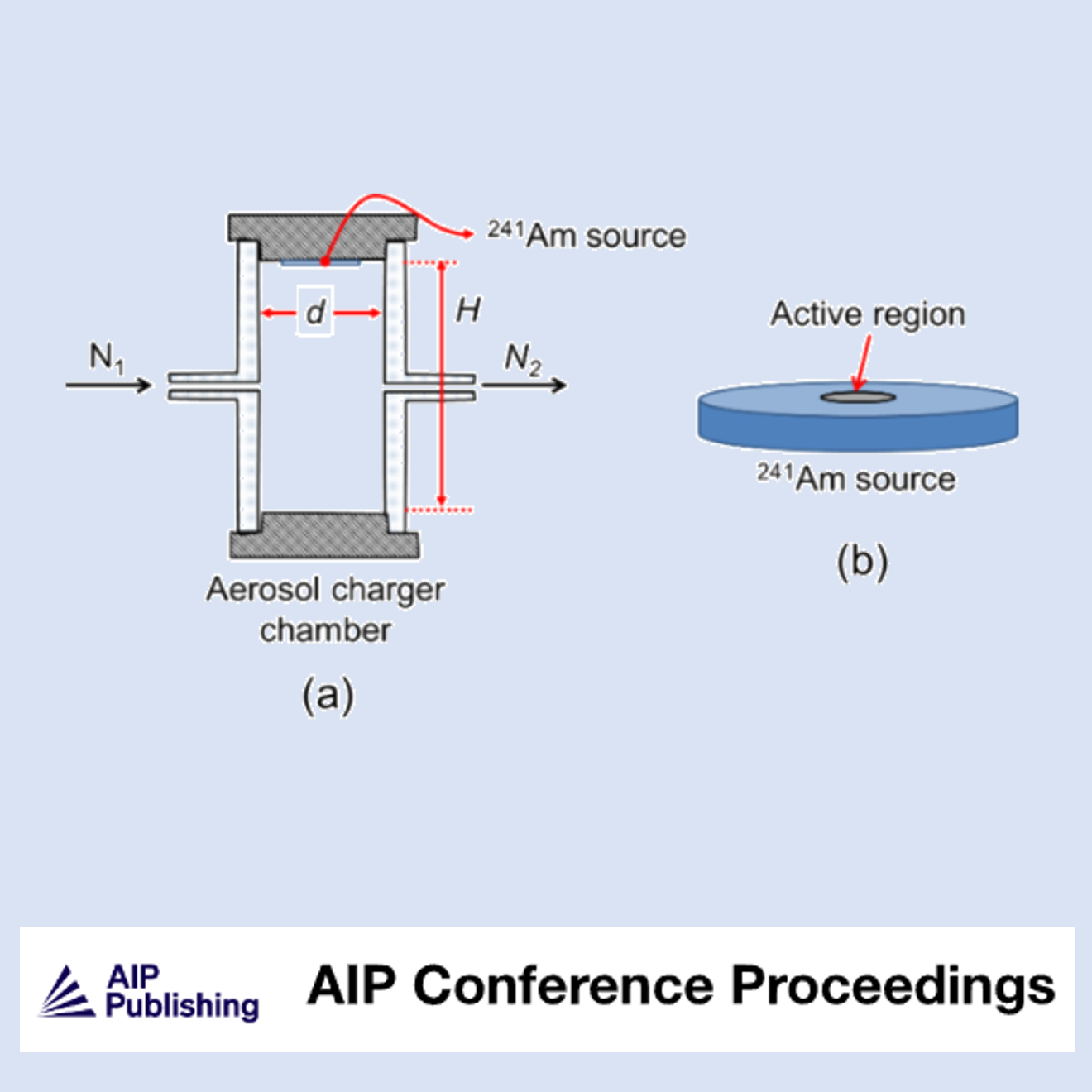
Using an aerosol charger based on a radioactive source remains a priority due to the stability and balance of the ions they produce. Furthermore, the utilization of radioactive sources requires intense caution. Subsequently, special treatment is needed in handling radioactive waste after the charger is no longer in use. Therefore, the lifespan of this type of charger must be considered. No recent study was conducted to estimate the lifespan by involving the contamination effect due to deposited particles. Compared to the effect of decreasing radioactive activity, the presence of particle deposition should be more significant in causing the decline in aerosol charger performance. Therefore, this paper purpose a simple model for estimating the lifespan of an aerosol charger based on radioactive sources. The developed model was assumed that when the deposited particles covered the active region, the effective activity of the radioactive source was decreased. The effective activity was determined by utilizing a Monte-Carlo simulation. The results show that particle penetration, particle diameter, and concentration significantly impact the aerosol charger lifespan. High penetration and low concentration are needed to achieve a long lifespan. The aerosol charger used for measuring small particles has a longer lifespan than for measuring large particles. The simulation results obtained that the aerosol charger based on the radioactive source used in this paper has a lifespan of approximately 700 days.